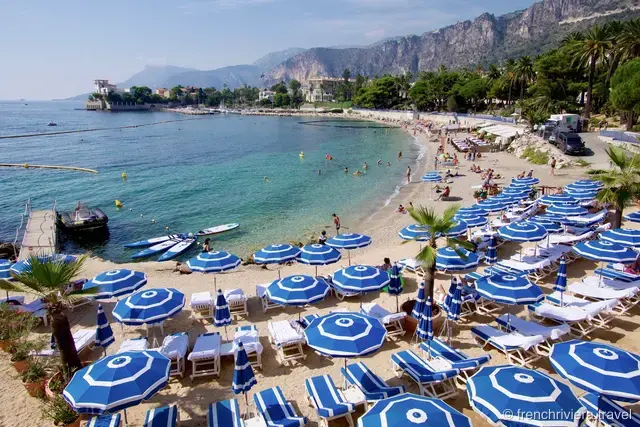
A week on the French Riviera: my 7-day itinerary from Nice
One week is just right for the French Riviera. It’s enough time to see Nice properly, take the most beautiful day trips along the coast and into the hills and still have an afternoon or two on the beach. This is the itinerary I suggest to friends who come to visit me in Nice. You don’t need a car: you travel by train or bus, and every day starts and ends in Nice.
A week on the French Riviera at a glance
- Base: Nice, for all seven nights.
- Day 1: Nice’s Old Town, Castle Hill and the Promenade des Anglais.
- Day 2: Villefranche-sur-Mer and the Villa Ephrussi de Rothschild on Cap Ferrat.
- Day 3: Monaco and Èze.
- Day 4: Antibes and the Picasso Museum.
- Day 5: Cannes and the Lérins Islands.
- Day 6: Saint-Paul-de-Vence and Vence.
- Day 7: Menton and Roquebrune-Cap-Martin.
- Getting around: TER trains and buses; a 7-day Pass SudAzur Explore costs €50.
Why Nice is the best base
Nice sits right in the middle of the French Riviera. Trains run along the coast in both directions, buses climb to the hill villages, and the airport is 25–30 minutes from the center by tram. You can stay in one hotel for the whole week and travel light, which is much more relaxing than changing towns every two days. My guide to hotels in Nice explains which neighborhood to choose, and my page on where to stay on the French Riviera compares Nice with the other towns.
Most day trips take 15–40 minutes each way. Buy train tickets in the SNCF Connect app or from the ticket machines at the station; bus tickets are easiest to buy in the Lignes d’Azur and ZOU! apps. If you plan to take the train on most days, the Pass SudAzur Explore gives you seven days of unlimited travel on trains, trams and buses for €50. My guide to public transportation in Nice has all the details.
Day 1: Nice
Spend your first day getting to know Nice on foot. Start at Place Massena and wander through the Old Town: the flower and food market on the Cours Saleya in the morning, then socca (a chickpea pancake) for lunch. In the afternoon, climb Castle Hill (or take the free elevator, which is sometimes out of service) for the best view of the Bay of Angels, then end the day with a sunset walk along the Promenade des Anglais. My one-day itinerary for Nice has the whole route with a map, and my guide to where to eat in Nice will help with dinner.
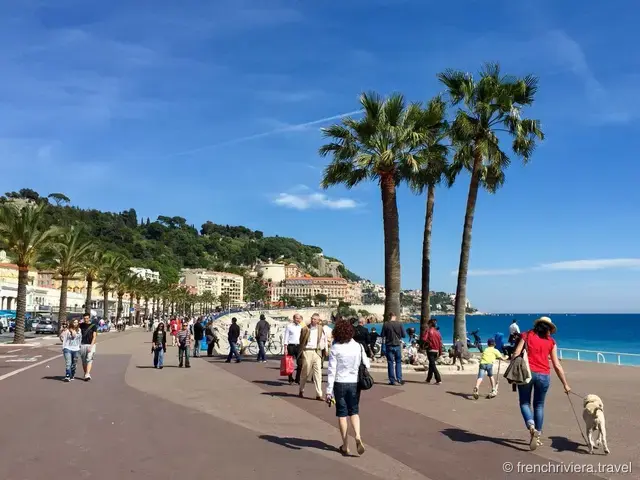
If you arrive in the afternoon, keep it simple: the Old Town, an early dinner and the Promenade at sunset. The museums, such as the Matisse Museum in Cimiez (closed on Tuesdays), can wait for a rainy day.
Day 2: Villefranche-sur-Mer and Cap Ferrat
Villefranche-sur-Mer, just 6–8 minutes from Nice by train, sits on a deep bay, and its colorful old town slopes down to the water. Walk through the Rue Obscure, a vaulted medieval street under the houses, see the little chapel decorated by Jean Cocteau and follow the citadel walls along the sea.
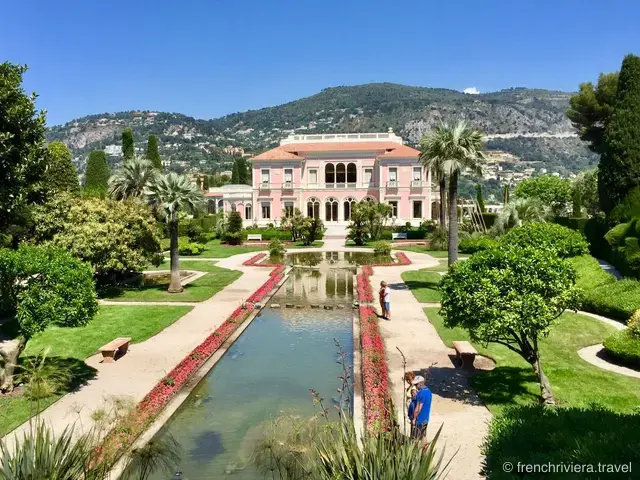
In the afternoon, take bus 15 to the Villa Ephrussi de Rothschild on Cap Ferrat, a pink Belle Époque palace surrounded by nine themed gardens, with the sea on both sides (open every day). If you’d rather swim, walk down to the small beaches of Cap Ferrat, or follow the coastal path around the peninsula. My article about the Villa Ephrussi de Rothschild explains how to get there.
Day 3: Monaco and Èze
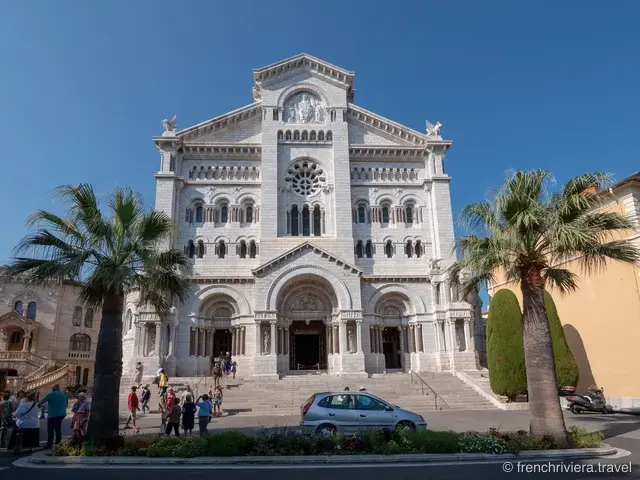
In the morning, take the train to Monaco, 20–25 minutes from Nice. Walk up to the Old Town on the Rock in time for the changing of the guard in front of the Prince’s Palace at 11:55am, see the cathedral where Grace Kelly is buried and the gardens above the sea, then go down to Port Hercules and up to the Monte Carlo Casino. My one-day Monaco itinerary shows the easiest route, with the free public elevators that save a lot of climbing.
In the afternoon, take bus 602 from Monaco up to Èze (about 20 minutes), the medieval village on a rock high above the sea. Walk through its narrow lanes to the exotic garden at the top, which has one of the most spectacular views on the coast, and stop at the Fragonard perfume factory near the village entrance. The buses are the tricky part of this day: bus 602 runs only about six times a day, and outside summer not on Sundays, so plan your morning in Monaco around its timetable. From Èze, buses 82 and 602 return to Nice in about 30–35 minutes; check the times when you arrive.
Day 4: Antibes
Antibes is 15–25 minutes west of Nice by train. Go in the morning for the Provençal market in the old town, then visit the Picasso Museum (closed on Mondays) in the Château Grimaldi, right above the sea, where Picasso worked in 1946. Avoid Mondays: the museum is closed, and from September to May so is the market. Walk along the ramparts to Port Vauban, one of the largest yacht harbors in the Mediterranean.
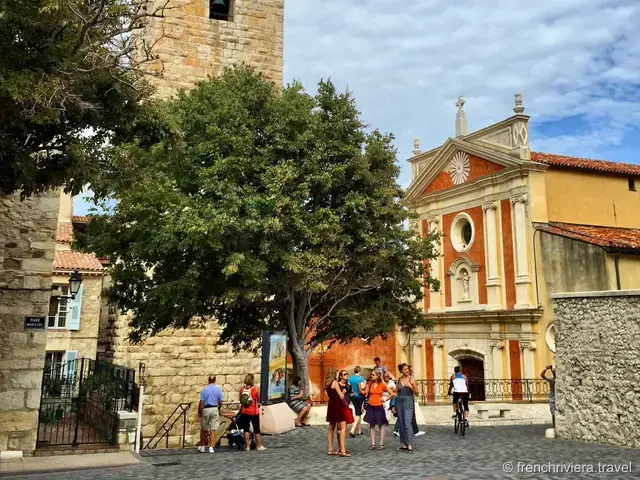
For the afternoon, head to the sandy beaches of Juan-les-Pins on the other side of Cap d’Antibes, or walk the coastal path around the cape, one of the loveliest walks on the Riviera. My guide to the Picasso Museum in Antibes has the opening hours, and my guide to the beaches of the French Riviera will help you pick a spot.
Day 5: Cannes and the Lérins Islands
The train to Cannes takes 30–40 minutes. Go straight to the Old Port and take a ferry to the Lérins Islands, just 15 minutes away. On Sainte-Marguerite, you can see Fort Royal, where the Man in the Iron Mask was imprisoned, and walk through the pine and eucalyptus woods to quiet coves. On Saint-Honorat, monks still make wine around their fortified monastery. There is no boat between the islands, so pick one; a round-trip ticket costs about €18–20.
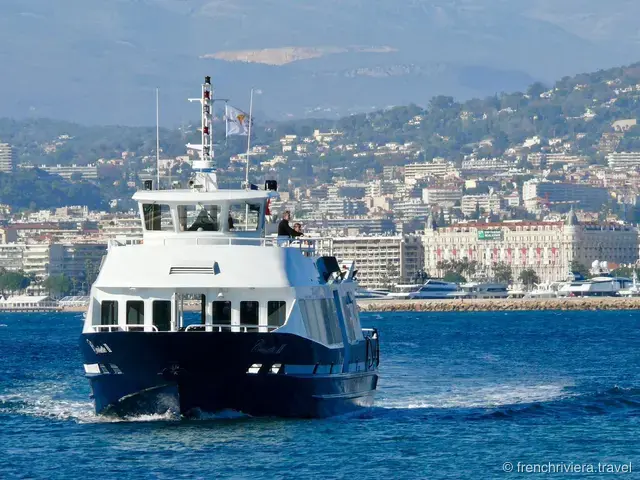
Back in Cannes in the afternoon, walk along La Croisette, take a photo on the red-carpet steps of the Palais des Festivals, home of the Cannes Film Festival and climb the old lanes of Le Suquet for the view over the bay at sunset.
Day 6: Saint-Paul-de-Vence and Vence
Today you head into the hills. Take the train to Cagnes-sur-Mer (about 15 minutes) then ZOU! bus 655 up to Saint-Paul-de-Vence, a walled village full of art galleries, flower-filled squares and views of the sea and the Alps. Marc Chagall lived here for nearly 20 years and is buried in the village cemetery. Just outside the walls, the Fondation Maeght is one of the best modern art museums in France, with works by Miró, Giacometti and Chagall in a garden setting (open every day).
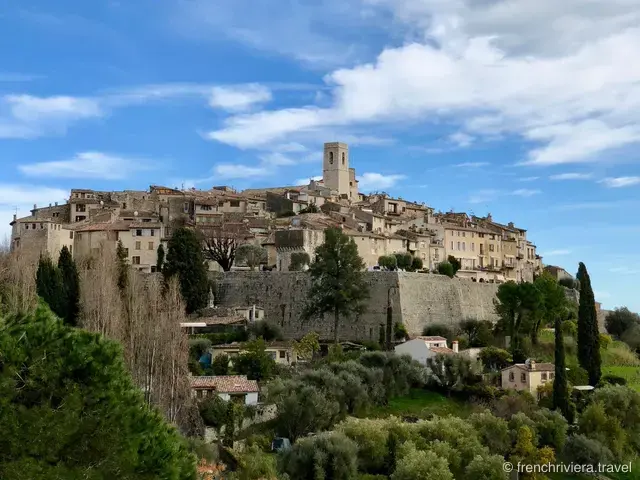
Bus 655 continues to Vence, a lively old town with fountains, cafés and fewer tourists. Just outside the center is the Chapel of the Rosary, designed and decorated by Henri Matisse; it’s open only on certain days, so check before you go. To get back to Nice, take bus 655 down to Cagnes-sur-Mer and catch the train there, or take bus 9 to Grand Arénas, next to Nice airport, and the tram into the city.
Day 7: Menton and Roquebrune-Cap-Martin
On your final day, take the train east to Menton, the last town before Italy (under 40 minutes from Nice). Its old town of ochre and yellow houses climbs the hill to the Basilica of Saint-Michel, and the view from the old cemetery at the top is wonderful. Menton has a covered market, a beach right in town and some of the finest gardens on the coast. In February, it hosts the Lemon Festival.
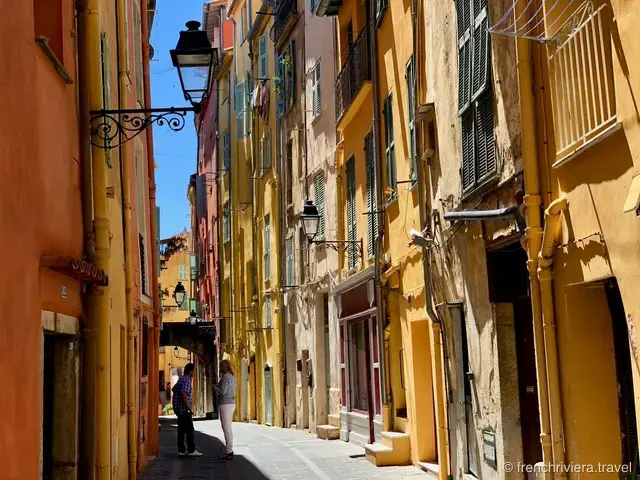
On the way back, stop at Roquebrune-Cap-Martin, with its medieval village and castle, or walk the coastal path around Cap Martin. If you’d rather end the week at a slower pace, spend the day on the beach in Nice instead or visit the museums you skipped on Day 1.
A 5-day version
If you have only five days, keep Nice as your base and plan your days like this:
- Nice, with Villefranche in the late afternoon (6–8 minutes by train).
- Monaco and Èze.
- Antibes.
- Cannes and the Lérins Islands.
- Saint-Paul-de-Vence and Vence.
Menton and the Villa Ephrussi are the easiest to leave out; you can add Menton to the Monaco day if you skip Èze.
Day trips from Nice at a glance
| Destination | Getting there from Nice | Travel time |
|---|---|---|
| Villefranche-sur-Mer | Train | 6–8 minutes |
| Monaco | Train | 20–25 minutes |
| Èze | Bus 82 or 602 | About 30 minutes |
| Antibes | Train | 15–25 minutes |
| Cannes | Train | 30–40 minutes |
| Saint-Paul-de-Vence | Train to Cagnes-sur-Mer, then bus 655 | About 1 hour |
| Menton | Train | Under 40 minutes |
All the places in this itinerary are on the map below; each day has its own color.
List of places (16)
Nearest to you
Day 2: Villefranche and Cap Ferrat
Day 3: Èze and Monaco
Day 4: Antibes
Day 5: Cannes and the Lérins Islands
Day 6: Saint-Paul-de-Vence and Vence
Day 7: Menton
With a car, or a different base
You don’t need a car for this itinerary, but a day behind the wheel opens up the hills behind the coast, which are hard to reach by bus: Tourrettes-sur-Loup, Gourdon on its cliff and the perfume town of Grasse. My guide to renting a car on the French Riviera explains where to pick one up. For Saint-Tropez or the Gorges du Verdon, Nice is too far for a comfortable day trip: spend a night or two in Cannes or Antibes, or somewhere even closer.
If you’re still deciding between the coast and the lavender fields, my quiz Provence or the French Riviera? will help you choose. If you’re arriving on a cruise ship rather than staying for a week, see my guide to the French Riviera cruise ports.
Plan around the big events
A few events change everything on the Riviera: hotels fill up and prices double. Check the dates before you book: the Nice Carnival and the Menton Lemon Festival in February, the Cannes Film Festival in May, the Monaco Grand Prix in early June and the Monaco Yacht Show in September. They’re all worth seeing, but only if you plan ahead. Other dates are in our calendar of events.
Frequently asked questions
Is Nice a good base for exploring the French Riviera?
Yes. Nice has the airport, the widest choice of hotels and restaurants, and trains and buses in both directions along the coast: Monaco and Menton to the east, Antibes and Cannes to the west, and the hill villages inland. Every day trip in this itinerary starts and ends in Nice.
Do I need a car on the French Riviera?
No. Trains and buses reach everything in this itinerary, and you skip the traffic and the expensive parking. A car is worth renting for a day or two if you want to see the hill villages behind Grasse, the Gorges du Verdon or Saint-Tropez.
How many days do you need on the French Riviera?
A week is ideal: two days for Nice and its neighbors, and five day trips to Monaco and Èze, Antibes, Cannes, Saint-Paul-de-Vence and Menton. In five days you can still see the highlights if you skip Menton and combine Villefranche with Nice.
Is there a travel pass for a week on the French Riviera?
The Pass SudAzur Explore gives you seven days of unlimited travel on TER trains, trams and buses in the Alpes-Maritimes and Monaco for €50 (€40 for travelers under 18 with an adult). It pays off if you take the train on most days of your trip.
When is the best time for a week on the French Riviera?
May, June and September, when it’s warm enough for the beach and less crowded than in July and August. Check the dates of the big events: the Cannes Film Festival in May and the Monaco Grand Prix in early June fill the hotels and raise prices.
Comments (0)
No comments yet. Be the first!