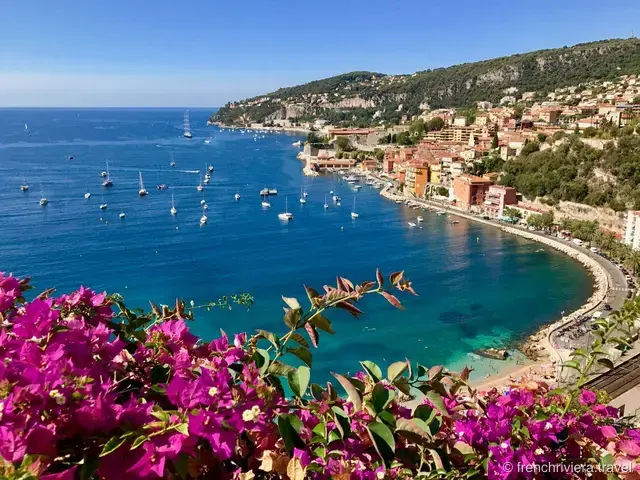
Visiting the French Riviera from a cruise ship: Villefranche, Nice, Monaco and Cannes on your own
A cruise day on the French Riviera is short, and there is so much to see within half an hour of the port. As a licensed guide, I meet cruise passengers every season, and most of them ask me the same thing: can we do it on our own? Yes, you can. The trains and buses along the coast are cheap and frequent, and the distances are short. Here’s where your ship will drop you off, what you can fit into a day, and how to get back on board stress-free.
French Riviera cruise ports at a glance
- Ports: Villefranche-sur-Mer (tender port, the main stop for Nice), the Old Port of Nice (small ships), Monaco (docks in Port Hercule), Cannes (tender port).
- Getting around: TER trains along the coast, buses at €1.70 in Nice and €2.20–2.60 on the regional ZOU! lines.
- Best plans: Nice’s Old Town and Castle Hill, Monaco’s Old Town and the casino, or a relaxed day in Villefranche.
- Hardest on your own: Èze village, which isn’t on the train line.
- Golden rule: be back an hour before all-aboard time.
Which port will your ship use?
Read your itinerary carefully. “Nice” on a cruise schedule usually means Villefranche-sur-Mer, a small town in a deep bay next door. Larger ships anchor there, and you go ashore by tender. Only smaller ships can dock in the Old Port of Nice, right in the city. Monaco has a proper cruise pier in Port Hercule, so you walk straight off the ship. In Cannes, ships anchor in the bay and tender passengers to the Old Port.
New rules in force since the 2026 season limit large cruise ships on this coast: only one ship with more than 1,300 passengers may anchor off each town per day, with even fewer such calls allowed in July and August, and Cannes has added limits of its own. Your cruise line may move your stop from one port to another (Villefranche, Nice, Cannes or Monaco), sometimes at short notice, and a strong swell can cancel tenders altogether. That’s one more reason to book only refundable tours until you know where you’ll come ashore. If your cruise also calls at Marseille, read my guide to the Marseille cruise port.
Villefranche-sur-Mer: the tender port for Nice
Tenders drop you at the Port de la Santé, the small harbor below the old town, where an information desk has train and bus timetables. You don’t need the ship’s shuttle to Nice. The old town of Villefranche starts right at the quay, and the train station is about a 10-minute walk along the bay, at the far end of the beach and up a flight of steps.
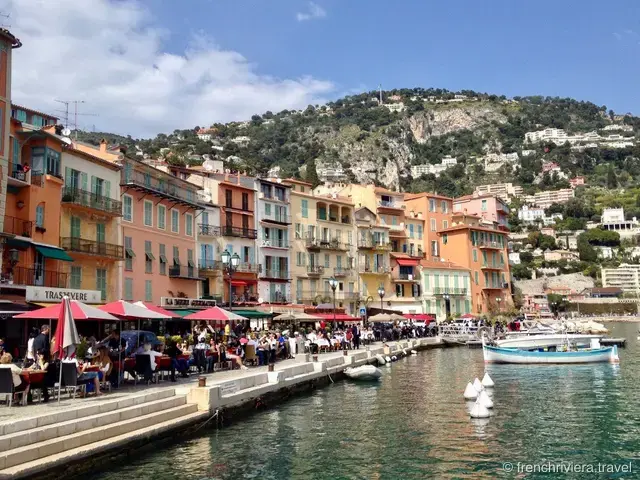
From the station, regional TER trains take about 6–8 minutes to Nice-Ville and about 15 minutes to Monaco-Monte-Carlo, and during the day they run every 15 minutes or so. Buy your ticket in the SNCF Connect app or at the machine before you get on, and buy your return ticket at the same time so you don’t have to wait in line on the way back. If you prefer the bus, walk up to the main coast road above the town. Bus 15 goes to Nice (€1.70 in the Lignes d’Azur app; more from the driver), and the ZOU! bus 600 runs along the coast to Nice in one direction and Monaco in the other (€2.20 in the app or €2.60 from the driver).
Plan 1: Nice in half a day
Take the train to Nice-Ville and walk down Avenue Jean Médecin to Place Massena, or take tram line 1 for two stops. Then follow a faster version of my one-day itinerary for Nice: the Old Town and the Cours Saleya market, socca for lunch, the view from Castle Hill and a walk on the Promenade des Anglais. On Mondays, the Cours Saleya hosts an antiques market instead of the flower and food stalls.
Plan 2: Monaco in half a day
Take the train to Monaco-Monte-Carlo, walk up to the casino through the station’s tunnels and elevators, then cross to the Old Town on the Rock for the Prince’s Palace and the cathedral. A shortened version of my one-day Monaco itinerary works well. The changing of the guard at the palace is at 11:55am every day, so it fits nicely into a morning.
Plan 3: Nice and Monaco in one day
Villefranche lies between the two, so you can do both: Monaco in the morning, back through Villefranche to Nice for lunch and the Old Town, and a short train ride back to the port. Keep it to two or three sights in each city, or you’ll spend the day waiting on train platforms.
Plan 4: Èze and the Corniche roads
Èze is the one place everybody wants to see and the one that is hardest to reach by public transportation. The village sits on a rock high above the sea, and the railroad runs along the shore far below. You’d have to go back to Nice to catch bus 82 or 602, which run only every hour or two, or take the train to Èze-sur-Mer and bus 83 up the hill. On a short port day, a small-group tour or a private driver is the better choice: in half a day you’ll see Èze, Monaco and the views from the Corniche roads, and you’ll be dropped back at the tender pier.
Plan 5: spend the day in Villefranche
If you’ve already seen Nice, stay put. Villefranche is one of the prettiest towns on the coast, and you can see it all without checking a timetable: the Rue Obscure, a vaulted medieval street that runs beneath the houses, the chapel decorated by Jean Cocteau, the citadel walls by the sea and a swim from the fine-gravel beach. Keen walkers can follow the coastal path around Cap Ferrat; otherwise, take bus 15 to the Villa Ephrussi de Rothschild and its gardens.
The Old Port of Nice
Smaller ships dock in Port Lympia, the Old Port of Nice, on the east side of Castle Hill. This is the easiest port on the coast: you can walk into the city in 10–15 minutes, either along the sea around the foot of Castle Hill or through Garibaldi Square. Tram line 2 starts at the port (Port Lympia stop) and runs across the city center.
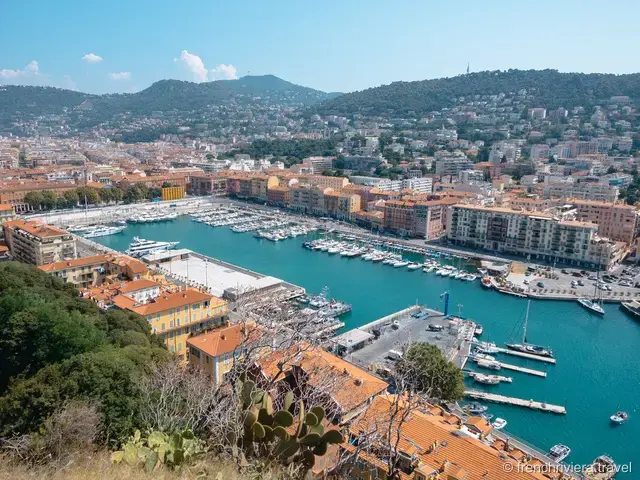
From here, all the plans above work just as well, starting from the Nice end. For Monaco or Villefranche, take bus 600 from the port, or walk about 15 minutes to Nice-Riquier station and take the train.
Monaco: off the ship and into the city
In Monaco, ships moor along the breakwater of Port Hercule, in the middle of the city. Everything is close, but the streets are steep. The Old Town on the Rock, with the Prince’s Palace and the Oceanographic Museum, is a short climb up from the port. To reach the casino in Monte Carlo, follow the harbor around to the other side, or cross it on the little electric Bateau Bus (€1.50, by app or contactless card). Monaco has free public elevators and escalators linking its streets, which save a lot of climbing.
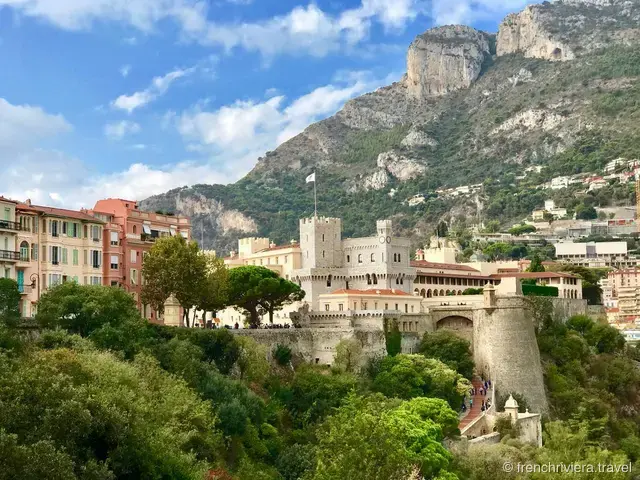
Monaco-Monte-Carlo station is right in the middle of town, and trains reach Villefranche in about 15 minutes and Nice in about 20. A morning in Monaco and an afternoon in Nice or Villefranche is an easy combination. If your Monaco stop is in early June, check whether it falls on Grand Prix weekend, when half the city becomes a racetrack.
Cannes: from the tender to La Croisette
In Cannes the tenders land in the Old Port, next to the Palais des Festivals, home of the Cannes Film Festival. You can climb the red-carpet steps for a photo, walk along La Croisette and climb the old lanes of Le Suquet to the castle museum and the best view of the bay. Read more in my guide to Cannes.
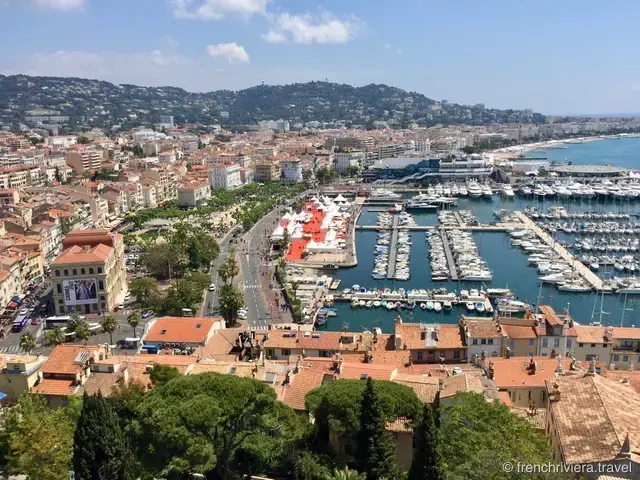
The ferries to the Lérins Islands leave from the same port and take only about 15 minutes, so you can spend a few hours in the pine woods of Sainte-Marguerite or with the monks of Saint-Honorat. Antibes is about 10 minutes away by train from Cannes station, which is a 10–15-minute walk from the port. Nice is 30–40 minutes away: too far for a relaxed port day.
Getting back on board
If you’re touring on your own, the ship won’t wait for you, so I always tell my cruise guests to plan the day backward from all-aboard time:
- Be back an hour early. In summer, the lines for the tenders back to the ship can be long, because everyone heads back at the same time.
- Have a plan B. Trains on this coast are sometimes late or canceled, and French rail strikes are announced a few days ahead. If the train lets you down, a bus or taxi is your backup, so leave enough time and carry some euros for it.
- Avoid the evening rush hour. Between about 6pm and 7pm, trains between Monaco and Nice are packed with commuters.
- Carry the port agent’s number. It’s printed in your ship’s daily program or on your cruise card; call it if something goes wrong.
- Wear comfortable walking shoes. Villefranche, Monaco and Le Suquet are full of stairs and steep streets.
Starting or ending your cruise in Nice?
Many Mediterranean cruises start or end in Nice or Villefranche. Nice Côte d’Azur Airport is only 25–30 minutes from the city center by tram, and my guide on how to get from Nice airport explains the tram, bus and taxi options. If you can, add a night or two before or after the cruise, so you can see the coast without watching the clock. My guide on where to stay on the French Riviera compares Nice, Villefranche, Monaco, Cannes, Antibes and other towns, with the cost of a day in each.
Frequently asked questions
Where do cruise ships stop for Nice?
Large ships anchor in the bay of Villefranche-sur-Mer and bring passengers ashore by tender. Smaller ships can dock in the Old Port of Nice (Port Lympia). Monaco has its own cruise pier in Port Hercule, and ships calling at Cannes anchor off the town and tender passengers to the Old Port.
How do I get from Villefranche to Nice without a shore excursion?
Walk about 10 minutes along the bay from the tender pier to the Villefranche-sur-Mer train station, above the beach, and take a TER train: Nice-Ville is about 6–8 minutes away, with trains every 15 minutes or so. Bus 15 also goes to Nice from the main road above the town (€1.70 in the Lignes d’Azur app).
Can I see Nice and Monaco on the same cruise day?
Yes, if you keep each visit short. From Villefranche, Nice is about 6–8 minutes by train in one direction and Monaco about 15 minutes in the other. A few hours in each Old Town is realistic; if you want to add Èze too, take a tour.
Is Èze easy to reach from a cruise ship?
Not really, unless you have a car or join a tour. The medieval village sits on a hilltop high above the railway: you need bus 82 or 602 from Nice, or the train to Èze-sur-Mer and bus 83 up the hill. On a short port day, a small-group tour that combines Èze and Monaco saves a lot of time.
How early should I be back at the port?
Be back at the tender pier or the gangway at least an hour before all-aboard time, and earlier in summer, when tender lines are long. Don’t count on the last possible train, and avoid traveling during the evening rush hour, roughly 6pm to 7pm.
Comments (0)
No comments yet. Be the first!