Visiting Marseille on a cruise: from the terminal to the Old Port on your own
Marseille is one of the busiest cruise ports in the Mediterranean, and many French Riviera cruises call here too. The catch is that the cruise terminal is in an industrial harbor about 5 miles from the city center. Don’t let that stop you: getting into town on your own is easy and cheap, and the Old Port, the MuCEM and Notre-Dame de la Garde are all within reach in a single day. Here’s how I’d plan it.
Marseille from a cruise ship at a glance
- Where you dock: the MPCT cruise terminal in the north harbor, about 5 miles (8 km) from the Old Port; some smaller ships at the J4 quay by the MuCEM.
- Into town: the free port shuttle or RTM bus 35T to La Joliette, then on foot or by bus.
- Tickets: €2 a ride when you tap a contactless credit or debit card on buses, the metro and trams.
- Best route: La Major, the MuCEM, Le Panier, the Old Port and Notre-Dame de la Garde.
- Golden rule: be back at the shuttle stop an hour before all-aboard time.
Marseille isn’t on the French Riviera. It’s the capital of Provence, and it has a very different feel: bigger, louder and more Mediterranean than Nice or Cannes. If your cruise also stops on the Riviera, my guide to the French Riviera cruise ports covers Villefranche, Nice, Monaco and Cannes.
Where will your ship dock?
Most cruise ships dock at the Marseille Provence Cruise Terminal (MPCT), in the commercial harbor north of downtown, at Cap Janet. This is a working port with container cranes and ferries, and you can’t walk from it into the city. When you leave the ship, follow the green line on the ground to the exit, Gate 4 (Porte 4); depending on where your ship is berthed, the walk takes 5–12 minutes.
Some smaller ships berth at the J4 quay, right next to the MuCEM and Fort Saint-Jean. If yours is one of them, you can skip the next section: the Old Port is about a 15-minute walk away.
Getting from the terminal into the city
Most cruise lines park their own shuttle buses right next to the ship and take you straight to the Old Port. It’s the most convenient option, but not a cheap one: the tickets for the ride into town add up quickly, especially for a family. You can get there on your own for much less.
On cruise days, the port runs a free shuttle bus from Gate 4 to La Joliette, in the modern business district. It stops at 9 Quai du Lazaret, between Les Terrasses du Port shopping mall and the ferry terminal. City bus 35T runs on cruise days from Gate 4 to Place de la Joliette, a few minutes’ walk away, for the regular bus fare. Neither goes all the way to the Old Port. Taxis wait at Place de la Joliette; Marseille taxis use the meter.
From La Joliette, the nicest way to reach the Old Port is to walk (about 25 minutes), and you’ll see half the sights along the way (see my plan below). If you’re in a hurry, take bus 55 or 82 to the Old Port (about 10–15 minutes).
Public transportation in Marseille is run by RTM: two metro lines, three tram lines and many buses. As of November 2026, a ride costs €2 when you tap a contactless credit or debit card (or your phone) on the reader; one card can pay for up to five people. A ticket bought from the bus driver costs €2.50, and a 24-hour pass €6.70.
A day in Marseille: my walking plan
This route starts at La Joliette, where the shuttle drops you off, and ends at the Old Port, with an easy ride up to Notre-Dame de la Garde in the afternoon.
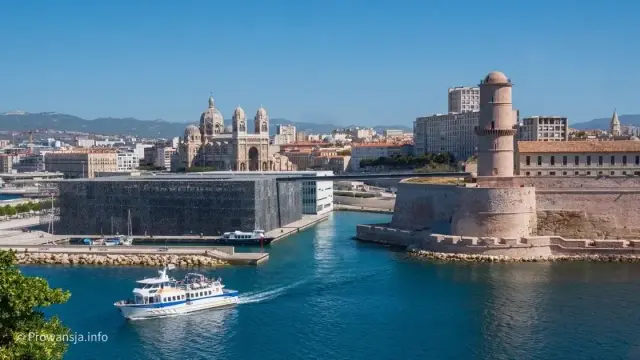
La Major and the MuCEM. Walk toward the sea to the striped La Major cathedral, one of the largest in France, then on to the MuCEM, the Museum of European and Mediterranean Civilizations, housed in a cube wrapped in lacy concrete. A footbridge links it to the medieval Fort Saint-Jean. The fort, the gardens and the museum’s rooftop terrace are free, with great views of the harbor; you only pay for the exhibitions. The MuCEM is closed on Tuesdays.
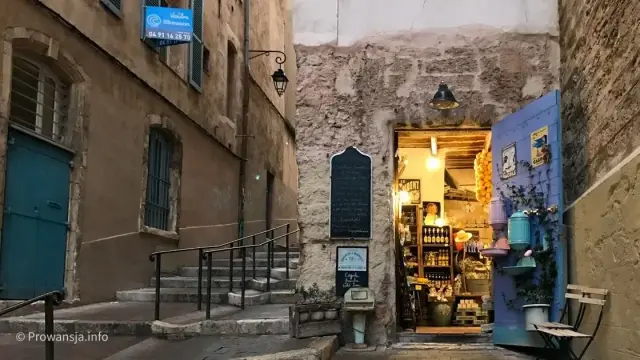
Le Panier. A second footbridge takes you from the fort into Le Panier, the oldest part of the city, a hill of steep lanes, colorful shutters, street art and small soap and craft shops. In the heart of the quarter is the Vieille Charité, a former almshouse with a beautiful arcaded courtyard.
The Old Port. Walk down to the Old Port (Vieux-Port), the heart of the city for 2,600 years. In the morning, fishermen sell their catch on the quay, and everyone takes a selfie reflected in the huge mirrored canopy at the end of the harbor. This is the place for lunch: an authentic bouillabaisse costs €60–90 a person, but a bowl of the local fish soup is much cheaper and just as good for a first taste. My guide to Marseille has my picks for where to eat.
Notre-Dame de la Garde. In the afternoon, take bus 60 or the little tourist train from the Old Port up to Notre-Dame de la Garde, the basilica on the highest hill in town, crowned by a golden statue of the Virgin. The view over the city, the islands and the sea is the best in Marseille. The basilica is open every day and free to visit, but you can’t walk around inside during Mass. You can walk up, too, but it’s a long, steep climb, especially in summer.

The Château d’If
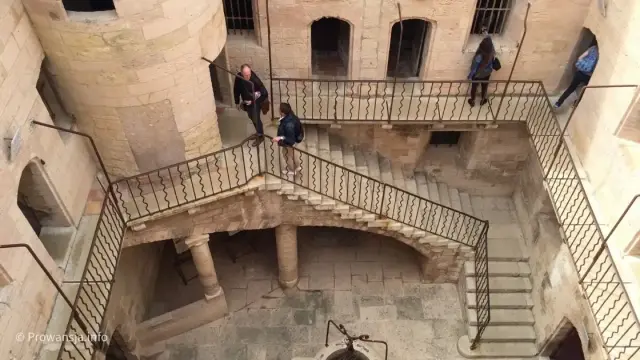
If you’ve read The Count of Monte Cristo, you’ll want to see the Château d’If, the island fortress where Dumas imprisoned his hero. Boats leave from the Old Port (Quai de la Fraternité, at the bottom of La Canebière) and the crossing is short; a round trip to If and the Frioul islands costs €26, and entry to the castle is €7, free for anyone under 18. Allow at least three hours for the whole trip. The castle is closed on Mondays from late September to March, and when the mistral blows, the boats don’t run, so check before you go.
Day trips from the port: Cassis or Aix-en-Provence
With a long port day, you can leave the city behind. Both trips start from the center, so first allow 30–45 minutes to get from the ship to the bus.
Aix-en-Provence, the elegant old capital of Provence, with its fountains, markets and the Cours Mirabeau, is the easier trip. Take metro M2 from La Joliette to Saint-Charles station, then bus 50 from the bus station next to it (€7 with a contactless card, about 30–45 minutes, depending on traffic) or a TER regional train (35–45 minutes). Plan on at least 7 hours in port.
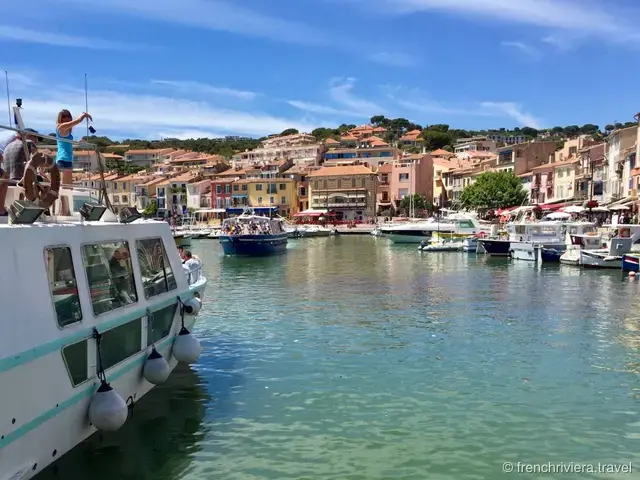
Cassis is a small fishing port with pastel houses and the famous calanques, narrow inlets between white limestone cliffs. Bus 78 leaves from near the Castellane metro station and takes about 45 minutes, but it runs only about every 45 minutes, so check the return times before you go. In Cassis, boat tours from the harbor visit three calanques in about an hour. You need at least 8 hours in port, and I wouldn’t try it on a shorter day.
If you’d rather not watch the clock, a shore excursion to Cassis and the calanques, or to Aix and the Provence countryside, takes care of the timing for you.
I don’t recommend Avignon on a port day: with the trip to Saint-Charles and the train, it’s too long a trip to enjoy without rushing.
Getting back on board
- Be at the shuttle stop an hour before all-aboard. Allow at least 45 minutes from the Old Port to the ship: the walk or bus to La Joliette, the shuttle and the walk to your berth.
- Ask about the last shuttle. The free shuttle doesn’t run all evening; check the time of the last one at Gate 4 on your way out.
- Keep a taxi as your backup plan, and have euros or a card to pay for it.
- Watch your bag. Like any big port city, Marseille has pickpockets, especially in crowds on the metro and around the Old Port.
Starting or ending your cruise in Marseille
Marseille is a home port for MSC and Costa, so many Mediterranean cruises begin or end here. There’s no direct bus from the airport to the terminal. Either take a taxi all the way, or take the A1 shuttle bus to Saint-Charles station (€15 with a contactless card), then metro M2 to La Joliette and bus 35T or a taxi from there. If you arrive by train at Saint-Charles, take the same metro and bus. At the terminal, you drop off your bags at the luggage drop-off, and they’re delivered to your cabin.
If you can, spend a night in Marseille before or after the cruise, in a hotel near the Old Port, where everything is within walking distance: see hotels around the Old Port. The hotel link goes to Booking.com: if you book through it, we earn a commission at no extra cost to you (learn more). And if you’re still deciding where to spend your vacation, my quiz Provence or the French Riviera? will help you choose.
Frequently asked questions
Where do cruise ships dock in Marseille?
Most ships dock at the Marseille Provence Cruise Terminal (MPCT) in the commercial harbor north of the city, about 5 miles (8 km) from the Old Port. Some smaller ships can berth at the J4 quay, right next to the MuCEM, a short walk from the Old Port.
How do I get from the Marseille cruise terminal to the Old Port?
On cruise days, a free port shuttle runs from Gate 4 of the terminal to La Joliette, by Les Terrasses du Port shopping mall, and RTM bus 35T runs from Gate 4 to Place de la Joliette nearby for the regular €2 fare. From La Joliette, walk about 25 minutes to the Old Port, past the cathedral and the MuCEM and through Le Panier, or take bus 55 or 82. Cruise line shuttles and taxis are faster but cost more.
Can I walk from the cruise terminal into Marseille?
No. The terminal is inside a busy commercial port, and the city center is about 5 miles away. You only walk from the ship to the Gate 4 exit, 5–12 minutes depending on your berth; from there, take the shuttle, the bus or a taxi.
Can I visit Cassis or Aix-en-Provence on a Marseille port day?
Yes, on a long port day. Aix-en-Provence is about 30–45 minutes from Marseille Saint-Charles by bus 50 or train, and you’ll need at least 7 hours in port. Cassis is about 45 minutes by bus 78, which runs only about every 45 minutes, so allow at least 8 hours.
What is closed in Marseille on Mondays and Tuesdays?
The city museums, such as the History Museum and the Vieille Charité, are closed on Mondays, and the MuCEM is closed on Tuesdays. The Château d’If is closed on Mondays from late September to March. Notre-Dame de la Garde is open every day.
Comments (0)
No comments yet. Be the first!