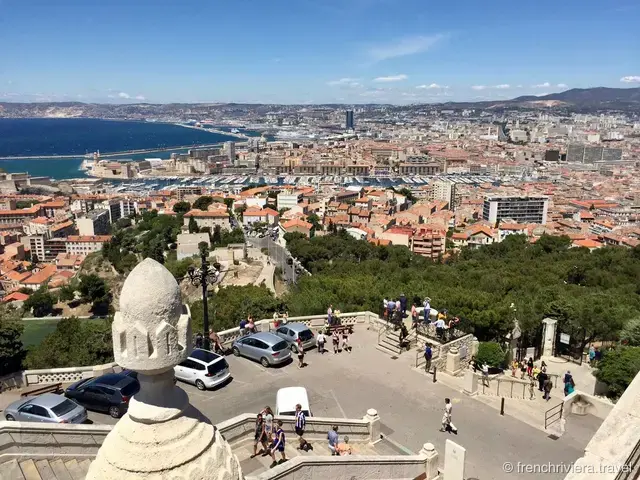
Marseille – the second largest city in France
Marseille is the second largest city in France, and the capital of Provence. It has a unique Mediterranean character and is probably the most multicultural city in Europe.
Marseille is the capital of Provence, and borders the French Riviera. It’s a place that should not be missed if you are spending holidays in Nice or Cannes. Getting to Marseille is easy, and the city is very interesting. It’s the second largest city in France, with about 870,000 inhabitants – very Mediterranean and very multicultural, and since it has always been a port city, it is open to the whole world, and differs from the other cities in the south of France. Founded by Greek sailors around 600 BC as Massalia, it is also one of the oldest cities in France.
Marseille at a glance
- Where: on the Mediterranean in Provence, about 2.5 hours west of Nice by train.
- Don’t miss: the Old Port, Notre-Dame de la Garde, Le Panier, the MuCEM and Fort Saint-Jean, and the Château d’If.
- Eat: bouillabaisse, or the cheaper fish soup, and navettes biscuits.
- How long: one day for the city, a weekend with the calanques and Cassis.
- Airport: Marseille Provence, with the A1 bus to Saint-Charles station (30–50 minutes, €15 with a contactless card).
For years Marseille had a reputation as a dangerous port city, but much changed after 2013, when it was the European Capital of Culture: the center around the Old Port was renovated, and cruise ships now bring visitors from all over the world. If you arrive on one, my guide to the Marseille cruise port explains how to get from the terminal to the Old Port.
Is Marseille on the French Riviera?
Strictly speaking, no. The French Riviera, or Côte d’Azur, is usually counted from Toulon or Saint-Tropez east to Menton and the Italian border. Marseille lies west of it, in Provence, about 200 km from Nice. But it is on the same Mediterranean coast, and an easy trip from the Riviera: the train from Nice takes about 2.5 hours. That makes Marseille a perfect stop between the Riviera and the rest of Provence, with Aix-en-Provence 30 minutes away and Avignon an hour.
A guide to Marseille
It’s worth staying for at least the weekend in Marseille. This will allow you to visit the city’s attractions and to discover some of the surrounding, beautiful places such as Cassis, the calanques and Aix-en-Provence. However, if you do not have time for this and you are on the French Riviera, you can see the city in a long day trip by train or by renting a car in Nice.
Almost all the most important attractions of the city can be found in the vicinity of the Old Port (Vieux Port), which is why you should go there first. North of the port are the old quarter of Le Panier, the MuCEM, Fort Saint-Jean and the La Major cathedral; south of it, the hill of Notre-Dame de la Garde, the Saint-Victor Abbey and the road to the beaches; east, the Canebière and the Longchamp Palace. Attractions in the center of Marseille can be seen while walking, but remember that summer is very hot here and it will certainly be tiring. That is why it’s worth using public transport, especially to get up the La Garde hill to its basilica. A hat and a bottle of water are of course the basics in summer.
What to do in Marseille
What is there to do in Marseille? You will surely admire the beautiful architecture, the great panoramic views, and enjoy good food! The most important places worth visiting while you are in the city include:
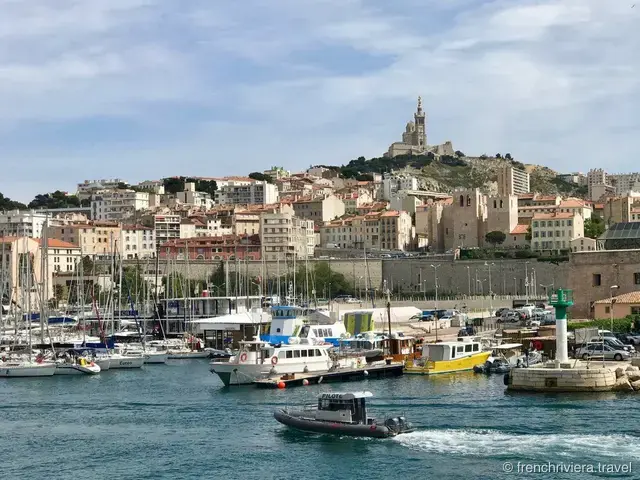
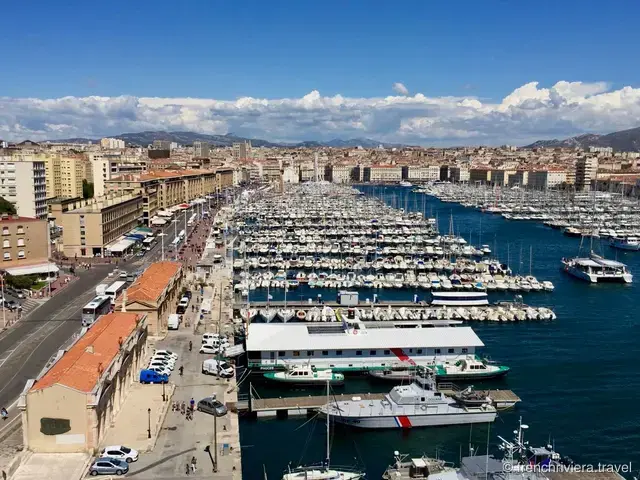
- The Old Port of Marseille (Vieux Port) – the center of the city and the starting point for discovering its attractions. In the morning, fishermen sell their catch on the quay, and in the evening the cafés fill up.
- The Basilica Notre-Dame de la Garde – on a 162 m hill overlooking the entire city, crowned by a gilded statue of the Virgin visible from almost everywhere. Inside, look at the hundreds of ex-votos left by sailors. You can walk up, but it will be really tiring in the summer! I recommend taking bus 60 or the tourist train. The basilica and its terrace close in the evening, so check the opening hours if you want the sunset.
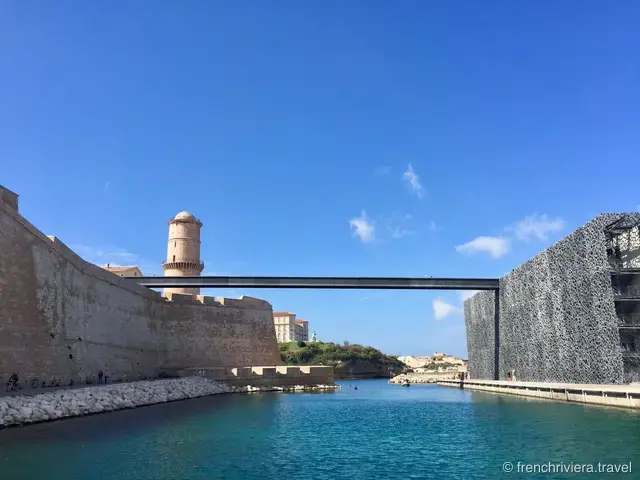
- The MuCEM (Museum of European and Mediterranean Civilisations) and Fort Saint-Jean – two perfectly connected structures, one ultra-modern and the other medieval, linked by a footbridge. The roof terrace and the fort are free to walk around, even without a museum ticket, and have great views of the Old Port. Details on mucem.org.
- Cosquer Méditerranée – a replica of the Cosquer cave from the calanques, whose entrance lies 37 m under the sea, with prehistoric paintings about 27,000 years old, in the Villa Méditerranée next to the MuCEM.
- Le Panier – the oldest quarter of the city, rebuilt after the Second World War, with street art, small cafés, the Maison Diamantée from the 16th century and La Vieille Charité, a former almshouse that is now a cultural center.
- The Cathedral La Major – one of the largest churches in France, from the 19th century, with its Romanesque predecessor, the Vieille Major, next to it.
- The Abbey of Saint-Victor – founded in the 5th century, one of the first places of Christian worship in this part of Europe; visit its crypts. Next door, the Four des Navettes has baked the local orange-blossom navettes biscuits since 1781.
- The islands of the Frioul archipelago – with the island of If and the Château d’If, where the famous Count of Monte Cristo was imprisoned in Dumas’s novel. Boats leave from the Old Port and take a quarter of an hour; the boat and the castle are paid separately (lebateau-frioul-if.fr).
- The Longchamp Palace with its fountain, the Museum of Fine Arts and the Natural History Museum, built to celebrate the canal that brought drinking water to Marseille (metro M1, Cinq Avenues Longchamp).
- The Museum of the History of Marseille, next to the Centre Bourse, with models of the old port and remains of the ancient city.
- Craftsmen producing Marseille’s famous soap, which you will find around the port, for example at the Musée du Savon de Marseille (25 Quai de Rive Neuve).
- The Velodrome Stadium – the home stadium of the Olympique de Marseille football club.
- Le Corbusier building (Unité d’Habitation, 280 Boulevard Michelet) – an iconic modernist building from 1952, with a roof terrace open to visitors.
- The Calanques – also called the Mediterranean fjords, best seen by boat from Cassis or from the Old Port.
If you do not know where to start, it is best to go to the Old Port and look around. Then see whatever takes your fancy. All these places, with the beaches, the stations and the bus to Cassis, are on this map:
List of places (27)
Nearest to you
- Notre-Dame de la Garde basilica
- Castellane metro (bus 78 to Cassis)
- Château d’If
- Le Corbusier’s Unité d’Habitation
- Vélodrome stadium
- Prado beach
- Les Goudes
- Catalans beach
- Saint-Victor Abbey
- View of the Old Port
- Vieux Port metro (M1)
- MuCEM and Fort Saint-Jean
- Recommended car park (Indigo, MuCEM)
- Tourist train to Notre-Dame de la Garde
- La Major cathedral
- La Vieille Charité
- Le Panier (old town)
- Saint-Charles station
- Longchamp Palace
- Vallon des Auffes
- Les Terrasses du Port
- Cruise terminal
- Old Port (Vieux Port)
- Town hall
- Cours Julien stairs
- La Canebière
- Luminy (walk to the Calanques)
Click a point to see what it is and get directions.
One day in Marseille
Day 1: start in the morning at the Old Port and its fish market, then walk through Le Panier to the La Major cathedral, the MuCEM and Fort Saint-Jean. In the late afternoon, go up to Notre-Dame de la Garde for the best view of the city. Day 2: in the morning, take the boat from the Old Port to the Château d’If; in the afternoon, walk along the Corniche Kennedy to the Catalans and Prado beaches, or go to the calanques and Cassis.
Where to sleep in Marseille?
Marseille offers a lot of different hotels and apartments. Look for a place in the center, near the Old Port and the sea: these are the safest areas, especially for evening walks, and everything is within walking distance. Avoid cheap places on the outskirts. In 2026, a double room in a three-star hotel costs about €80–175 a night, and in a five-star hotel about €215–460, from the cheapest month to the most expensive. See hotels around the Old Port, or check the best hotels in Marseille. The hotel links go to Booking.com: if you book through them we earn a commission, at no extra cost to you (learn more). You can also take advantage of the wide range of private Airbnb apartments. Another option is to stay in Aix-en-Provence or Cassis and visit Marseille for the day.
What to eat in Marseille
Marseille has its own local dish, and it’s worth trying. I’m talking about the famous Bouillabaisse fish soup, which can be ordered in many places, especially around the port. You can also have typical Provencal dishes, as well as Asian, French, and Italian cuisine, not to mention, bakery products and kebabs. Everyone will find their favorite flavors and places in Marseille.
The famous Bouillabaisse fish soup is cooked using at least five fish species, including the local scorpion fish (rascasse), with saffron. The best pieces of fish are served separately, the rest of the soup is ground. Its quality is mainly confirmed by its price: you will have to pay at least 60 euro per serving to get a good one, and up to about 90 euro in the most expensive restaurants, which often serve it only for two people. The Miramar restaurant (12 Quai du Port) is an iconic place for tourists with a wealthier wallet, and Chez Loury – Le Mistral (3 Rue Fortia) is another good address.
The Provencal fish soup is much cheaper, but is also significantly different from Bouillabaisse: it is made from any fish, and everything is ground before serving. An obligatory addition is a dried baguette, rouille (a mayonnaise with garlic and red pepper), grated cheese, and sometimes a clove of garlic. We eat it as follows: rub the baguette with garlic (if served), spread the rouille, put the baguette into the soup and sprinkle with cheese. After a while, it will pleasantly absorb the soup – this is the sign you can eat.
Personally, I like this dish very much – but not everyone likes it. You can order very good fish soup at a good price at Le 13 (13 Quai de Rive Neuve), also in the Old Port. You can find this dish in the starters menu; it costs about 11–15 euros and is called La soupe de poissons, or just fish soup. The waiter will not be offended if you order only this soup and a glass of rosé. I guarantee it is big enough for lunch. To finish, try a pastis, the anise drink of Provence, often cheaper than a glass of wine.
Public transport in Marseille
Public transport in Marseille is well organized and easy to use. There are two metro lines (M1 and M2), three tram lines and many buses, all run by RTM. The same ticket can be used for everything, and you can change between them while it is valid, but you can only enter the metro once per ticket. Tickets for public transport in Marseille can be bought from the vending machines at every metro station, from bus drivers (a little more expensive) or in the RTM app; there are also day passes and multi-trip tickets. Current fares are on the rtm.fr website.
From Marseille Provence airport (Marignane), the A1 shuttle bus (formerly 91) takes 30–50 minutes, depending on traffic, and costs €15 with a contactless card to Saint-Charles station, the main railway station; from there, take metro M1 or walk about 20 minutes down to the Old Port. From Nice, direct trains take about 2.5 hours to Saint-Charles.
Frequently asked questions
Is Marseille on the French Riviera?
Not quite. The French Riviera (Côte d’Azur) is usually counted from Toulon or Saint-Tropez east to Menton. Marseille is the capital of Provence, west of the Riviera, about 200 km from Nice, but it is an easy trip from it and shares the same Mediterranean coast.
Where is Marseille?
On the Mediterranean coast of southern France, in Provence, about 2.5 hours west of Nice by train or car, 30 minutes from Aix-en-Provence and 1 hour from Avignon. It is the second largest city in France.
How do you get from Nice to Marseille?
By train in about 2.5 hours, direct TGV or TER trains from Nice-Ville to Marseille Saint-Charles, or by car on the A8 motorway in about 2.5 hours. Long-distance buses are cheaper but slower.
What is Marseille famous for?
The Old Port, the Notre-Dame de la Garde basilica above the city, bouillabaisse fish soup, Marseille soap, the Château d’If from The Count of Monte Cristo, the MuCEM museum and the calanques, the limestone inlets between Marseille and Cassis.
Is Marseille safe for tourists?
The center around the Old Port, Le Panier, the MuCEM and Notre-Dame de la Garde is busy and safe to visit, especially since the city was the European Capital of Culture in 2013. As in any big city, watch out for pickpockets and avoid quiet outer districts at night.
How do you get from Marseille airport to the city?
By the A1 shuttle bus (formerly 91) from Marseille Provence airport to Saint-Charles station, 30–50 minutes depending on traffic, for €15 with a contactless card. From the station, take metro M1 or walk 20 minutes to the Old Port.
How many days do you need in Marseille?
One day for the main sights around the Old Port and Notre-Dame de la Garde, and a weekend to add the Château d’If, the beaches and the calanques or Cassis.
How much does a stay in Marseille cost?
Per person per day, lodging included (a double room shared by two), from the cheapest to the most expensive month. Getting there is not included.
budget
$60–$84
€54–€76
A hostel bed or an apartment for a family, bakeries and inexpensive eateries, the metro and trams, the Old Port and the island of If.
standard
$130–$183
€118–€166
A three-star hotel or an aparthotel for a family, restaurants, public transport, the Mucem and the island of If.
luxury
$517–$652
€468–€590
A five-star hotel, the best restaurants, taxis, private tours.
Calculate your trip on TripCosts.app
From our free trip cost calculator; prices checked on 2026-10-27.
Comments (0)
No comments yet. Be the first!