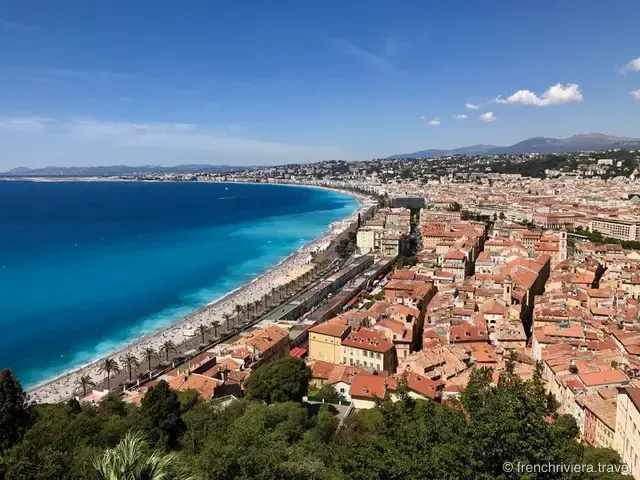
Nice – the capital of the French Riviera
Nice is a beautiful city as well as being the capital of the French Riviera. It’s a city worth visiting at any time of year! There are many museums waiting for you here, great scenery, green parks, and, of course, a 7 km long seaside promenade.
Nice at a glance
- Where: on the French Riviera in south-eastern France, about 12 miles from Monaco and 20 miles from the Italian border.
- Size: the largest city on the Riviera and the 5th largest in France, with about 350,000 residents.
- Airport: Nice Côte d’Azur, about 4 miles from the center, with tram line 2 to the city.
- How long: one day for the main sights, two or three days to enjoy them; more if you use Nice as a base for day trips.
- When: spring and autumn for sightseeing, summer for the beach.
- UNESCO: since 2021, Nice has been a World Heritage Site as the “Winter Resort Town of the Riviera”.
Nice is located on the French Riviera towards the Italian border and close to Monaco. This, the 5th largest city in France, is considered to be the capital of the Côte d’Azur, and millions of tourists from around the world visit Nice and the region every year. This is not surprising, because the sun shines here on about 300 days a year and the winters are mild.
I have lived in Nice since 2014. Below you will find what to see, the weather, how to get around, where to stay and what to eat; for events, trip costs and day trips, see our Nice travel guide.
Where is Nice?
Nice lies in the south-east of France, on the Bay of Angels (Baie des Anges) on the Mediterranean, in the department of Alpes-Maritimes. It is the largest city of the French Riviera, between Cannes (about 20 miles west) and Monaco (12 miles east), with the Alps rising just behind it. The Italian border at Menton is about 20 miles away, and Paris about 430 miles to the north (under 6 hours by high-speed train, or 1.5 hours by plane).
Nice is in France, but it has not always been: for centuries it belonged to the House of Savoy and the Kingdom of Sardinia, and it joined France only in 1860. That is why the Old Town looks so Italian, and why socca and pasta are as local as bouillabaisse.
The attractions of Nice
There are a lot of things to do in Nice, but the most important of Nice’s attractions are in its center, which definitely makes sightseeing easier. They include:
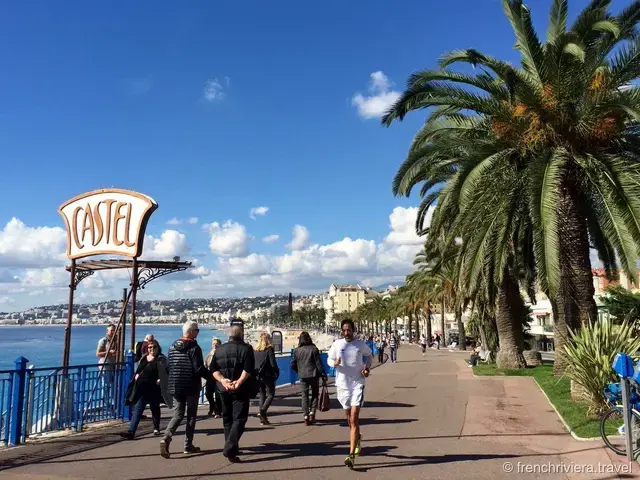
- Promenade des Anglais (Promenade of the English) – The most popular attraction in Nice is the 7 km long seaside promenade. You can stroll along here with the blue sea and beach on one side, and a string of palm trees on the other. It’s also the perfect place for morning jogging or rollerblading!
- Castle Hill (la Colline du Château) – Castle Hill is a large municipal park situated on the place where a medieval castle once stood. The castle was demolished on the instructions of Louis XIV. Today there are views – you can admire the Old Town, the Promenade des Anglais, and the Old Port from here. It’s a wonderful place to spend a day lying here on a blanket in the shade of the trees and reading a book, or sitting at a cafe and watching the passing tourists.
- Place Masséna – The main city square is a meeting place for residents as well as tourists and guides. Every year, the famous Nice Carnival takes place here. The square teems with life almost 24 hours a day, so it’s worth seeing it both during the day and at night.
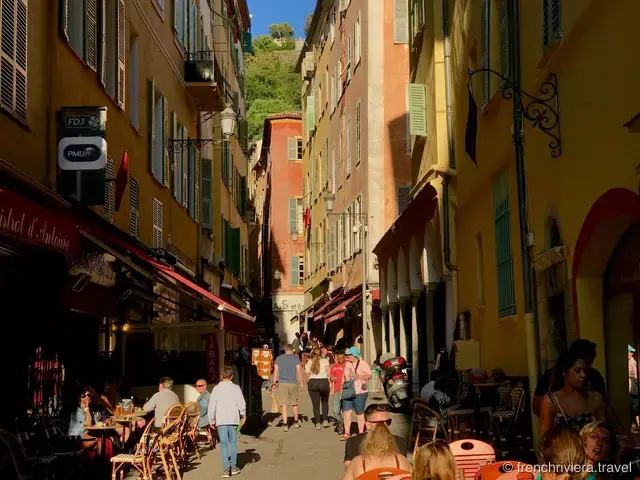
- The Old Town of Nice – Nice has the largest old town in the region, and it’s full of historic colorful tenement houses, narrow streets, delicious restaurants, and souvenir shops. It’s worth getting lost in its labyrinth of streets to get a feel for the real spirit of this place!
- Old Port of Nice – The surroundings of Nice’s Old Port are ideal for a walk. Here you can admire the luxury yachts, colorful houses reflecting in the water, and the green hills in the distance. Around the port you will find many restaurants and bars with great cocktails.
- Museums with interesting art collections – Nice has a dozen or so museums with interesting collections of the world’s greatest artists! Here you will find works by such artists as Marc Chagall, Matisse, Picasso, Dufy, Brea, Delacroix, Bonnard, Rousseau, Yves Klein, Francis Bacon, Sacha Sosno, Andy Warhol, and Dennis Oppenheim. A €15 ticket gives access to all the city museums and galleries for 96 hours; the Chagall museum is a national museum with its own ticket.
These are the most important attractions in Nice. If you are able to see them, you will certainly get a feel for the unique atmosphere of this city. For your convenience, I’ve placed them all on the map below.
List of places (5)
Nearest to you
- 1. Promenade des Anglais
- 2. Castle Hill (la Colline du Château)
- 3. Place Masséna
- 4. Old Town
- 5. Old Port of Nice
Weather in Nice
The weather in Nice is one of the main reasons to visit the Cote d’Azur. Here the sun shines on most days of the year, and rain falls only for a few days in autumn and winter. Summer temperatures oscillate around 30 degrees Celsius (86°F) during the day, while at night they are only slightly lower. July usually has the highest humidity, and the summer season runs from May through to the end of September. During these months, visiting the beautiful villages on the French Riviera can be a bit tiring – rather it’s the best time to relax on the beaches of the French Riviera.
The period from October to April is also worth visiting the region as it is an ideal time for hiking the cliffs and coastal walking routes, as well as for visiting the medieval villages. An autumn jacket will come in handy from November to March, while during the transitional period, a warm sweatshirt is enough during the day. Snow falls briefly in Nice only once every 10 years. In winter, there is practically no frost here.
Public transport in Nice
Public transport in Nice is provided by city buses and trams. The company is called Lignes d’Azur, and useful information can be found at lignesdazur.com, which is also in English. A single ticket costs €1.70 and is loaded onto a reusable plastic card that costs €2 (you can also buy tickets in the Lignes d’Azur app). There are ticket machines at all tram stops. Passes cost €7 for 1 day, €13 for 2 days and €20 for 7 days. These are the most popular tickets available for public transport in Nice.
The ticket should be validated in the vehicle immediately after entry. It is valid for 74 minutes and allows transfers in the same direction, but not on the return journey. Always enter the bus by the front door and exit from the middle or rear. If you are waiting at the stop for bus, do not forget to wave your hand to stop the vehicle. If you want to get off the bus at the next stop, press the STOP button inside the vehicle.
Regional ZOU! buses with numbers from 600 connect Nice with other cities on the French Riviera; a ticket costs €2.20 in the ZOU! app or €2.60 from the driver. The most popular are: 600 to Monaco and Menton, 602 to Èze and Monaco, 620 to Antibes and Cannes, and 650 to Grasse. For Saint-Paul de Vence and Vence, take the train to Cagnes-sur-Mer and then bus 655. For most of these towns, the regional TER train is faster.
Recommended for you: How to get from the airport to Nice city center?
Accommodation in Nice: hotels and apartments
The accommodation base in Nice is huge. You can find cheap tourist hotels, luxury hotels for the wealthiest guests, and apartments. Everyone will be able to find accommodation that will perfectly suit their tastes and their budget. The best areas for visitors are:
- The Old Town and the Promenade des Anglais – the sea, the market and the restaurants on your doorstep; the best choice for a first visit. See hotels in the Old Town.
- Jean Médecin and Nice-Ville station – cheaper hotels, the main shopping street and the trains for day trips. See hotels near the station.
- The Port – quieter, with good restaurants and a short walk to the Old Town. See hotels near the port.
Prices are highest in July and August and during the Carnival in February, and lowest from November to March. The hotel links go to Booking.com: if you book through them we earn a commission, at no extra cost to you (learn more). Read more about hotels in Nice and where to stay on the French Riviera.
What to eat in Nice? – local food
Food in Nice is a combination of French, Italian, and regional cuisine. Here you can eat delicious pizza and pasta, seafood, and classic French dishes. Of course, light Mediterranean cuisine prevails, and pink wine is the most popular drink. Typical local dishes include:
- Pissaladière – caramelized onion on a dough base resembling a pizza.
- Petits Farcis – small meatballs in grilled vegetables.
- Socca – pancakes made of chickpea flour with the addition of water and oil. Served with pepper. Can be bought at marketplaces.
- Salad Nicoise – classic salad with fresh vegetables, egg, tuna and olive oil.
- Fish Soup – served with croutons, grated cheese and mayonnaise with the addition of grated red peppers and garlic sauce (called Rouille). Spread the sauce over toast and add to the soup, then sprinkle with cheese.
- Mussels with fries – served mostly in a metal pot.
- Tapenade – a paste of green or black olives with the addition of garlic.
All these dishes can be tasted in any one of the many restaurants in the Old Town. Bon Appetit!
Day trips from Nice
Nice is the most practical base on the French Riviera: trains and buses reach most of the region in under an hour. The most popular day trips are Monaco (20 minutes by train), the hilltop village of Èze, the bay of Villefranche-sur-Mer, Antibes and Cannes, and the artists’ village of Saint-Paul de Vence. See all of them in our Nice travel guide, and every place on the French Riviera map.
I hope that this short guide to Nice will encourage you to visit this wonderful city! If you have any questions, you can ask them below in the comments.
Frequently asked questions
Where is Nice?
Nice is in south-eastern France, on the Mediterranean coast of the French Riviera (Côte d’Azur), about 12 miles from Monaco and 20 miles from the Italian border. It is the largest city on the Riviera and has its main airport.
Is Nice in France or Italy?
Nice is in France. It belonged for centuries to the House of Savoy and joined France in 1860, which is why its Old Town, food and dialect still feel partly Italian.
How many days do you need in Nice?
One day is enough for the main sights in the center, the Promenade des Anglais, the Old Town, Castle Hill and the Old Port. Two or three days let you add museums and the beach, and Nice is the best base for day trips to Monaco, Èze, Villefranche, Antibes and Cannes.
When is the best time to visit Nice?
Spring (April to June) and autumn (September and October) are the best for sightseeing, with warm days and fewer crowds. July and August are hot and busy but perfect for the beach, and the mild winter brings the Carnival in February.
How do you get from Nice airport to the city center?
Tram line 2 runs from both terminals to the port through the center in about 30 minutes; a regular ticket costs €1.70 plus €2 for the reusable card. A taxi to central Nice costs a flat fare of about €32.
Is Nice expensive?
Less than Monaco, Cannes or Saint-Tropez. Public transport costs €1.70 a ride, the city museums cost €15 for 96 hours, and the Old Town has many affordable restaurants; hotels are cheapest outside July and August.
Is Nice worth visiting?
Yes. Nice combines a long seafront, a lively Old Town, excellent museums and food, and easy trains and buses to the rest of the French Riviera, which makes it the most practical base for a first trip to the region.
Comments (0)
No comments yet. Be the first!