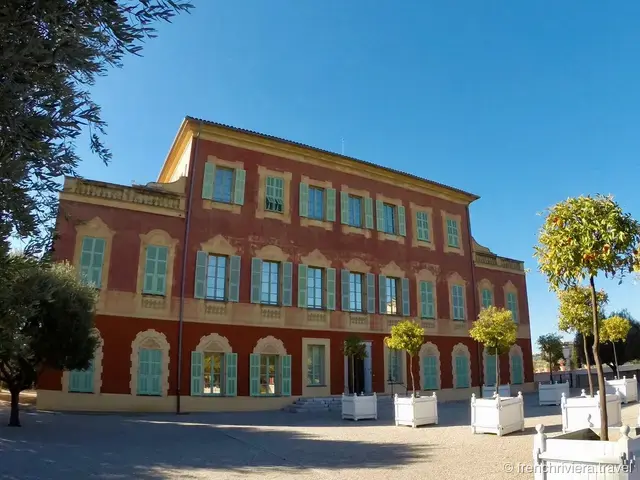
The Matisse Museum in Nice
The collection of works gathered at the Matisse Museum in Nice belongs to the largest in the world. There are also items of everyday use that once belonged to Henri Matisse.
Opened in Nice in 1963, the Matisse Museum contains one of the world’s largest collections of works by Henri Matisse, a French artist of world renown. It is located in the 17th century Villa des Arènes, formerly known as the Palais de Gubernatis (after the first owner).
The Matisse Museum at a glance
- What: one of the largest collections of Matisse’s work, from early paintings to cut-outs.
- Where: Villa des Arènes, Cimiez, next to the Roman arena.
- Price: €10, or €15 for all the city museums for 96 hours.
- Open: every day except Tuesday.
Combine it with the Roman ruins, the olive grove and the Franciscan garden of Cimiez, and the Marc Chagall Museum on the way back down. In the beginning the museum shared its space with the Archaeological Museum, which is now next door in its own building.
Who was Henri Matisse?
Henri Matisse lived from 1869 to 1954. He is considered the most outstanding representative of Fauvism, but before he came to this direction in painting he created in different styles. His friend and competitor was Pablo Picasso. From 1917 until his death, except for a 5-year break when he lived in nearby Vence, Matisse lived in Nice. Among others, he created his works in a studio located in the Yellow House in Nice’s Old Town.
Henri Matisse died of a heart attack in his apartment in Nice. He is buried with his wife in a cemetery in the Cimiez district, nearby the Matisse Museum.
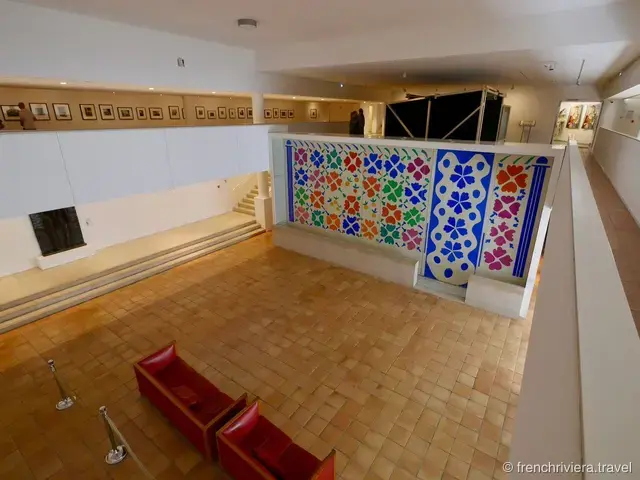
What to see at the Matisse Museum in Nice
The Matisse Museum in Nice perfectly documents the various stages of the artist’s development. Several dozen paintings; hundreds of drawings, prints, and photographs; sculptures, mostly made of bronze by Matisse himself; as well as books illustrated by the artist and numerous cut-outs, have been gathered together here. In addition, the museum houses everyday objects that belonged to Matisse.
A separate room is occupied by an exposition about the Chapel of the Rosary (Chapelle du Rosaire) located in Vence and designed by Matisse. The museum has, among other things, a scale model of the chapel, as well as the projects of individual works constituting the chapel’s equipment. The artist made this interior in thanks for the care given to him during his convalescence after oncological surgery.
Most of the exhibits come from donors, including Matisse himself and his family.
Practical information
You can find the Matisse Museum in the Cimiez district of Nice, and it’s worth visiting. You can get there from the city center by bus up Boulevard de Cimiez (an ordinary €1.70 ticket; check the current line on lignesdazur.com). It’s worth putting aside about an hour to visit the museum. An admission ticket costs €10, and for €15 you can buy a pass to all the city museums of Nice for 96 hours.
The museum is open every day except Tuesday, from 10AM to 6PM from 23 June to 15 October, and from 11AM to 6PM during other months of the year.
Website: musee-matisse-nice.org
Frequently asked questions
Where is the Matisse Museum in Nice?
In the red Villa des Arènes in the Cimiez district, next to the Roman arena and the olive grove, at 164 Avenue des Arènes de Cimiez. Take a bus up Boulevard de Cimiez from the center.
How much does the Matisse Museum cost?
Admission costs €10. For €15 you can buy a pass to all the city museums of Nice for 96 hours, which also covers the Archaeological Museum next door.
When is the Matisse Museum open?
Every day except Tuesday, from 10am to 6pm from late June to mid-October and from 11am to 6pm the rest of the year.
Where is Henri Matisse buried?
In the Cimiez cemetery, next to the Franciscan monastery, a few minutes’ walk from the museum.
Comments (0)
No comments yet. Be the first!