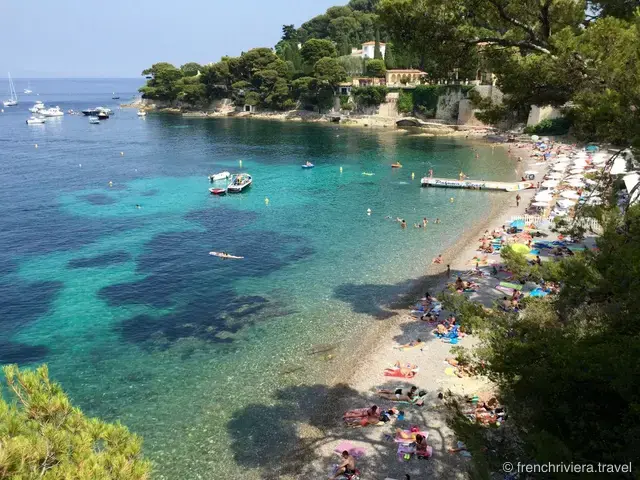
Beaches on the French Riviera
The beaches are probably the largest and most valuable attraction on the Côte d’Azur. Every day during the summer they are crowded with thousands of tourists. Which beaches on the French Riviera are the most beautiful, which are worth visiting, and how do they differ? Here is my subjective guide!
Summer on the French Riviera is long and hot – and of course sunny. It’s the perfect conditions for sunbathing. Often, it’s so warm that nothing other than lying on the beach is possible. On the French Riviera, of course, there is a whole bunch of beaches, and all of them are different. That’s why we usually go to different places, still looking for the most beautiful beach. A few of the places I’ve visited can be found below, most of them near Nice.
French Riviera beaches at a glance
- Pebbles or sand: mostly pebbles and gravel between Menton and Cannes; sand in Cannes, Antibes and Juan-les-Pins, Cap-d’Ail and around Saint-Tropez.
- Free or private: every official beach has free sections; private beaches rent sunbeds for about €25–50 a day.
- Season: June to early October; the sea is warmest in August.
- Bring: water shoes and a thick mat for pebble beaches (about €10 a pair in the shops along the Promenade des Anglais).
- Tip: in July and August, arrive early in the morning to find a spot and a parking place.
Where are the sandy beaches on the French Riviera?
Unfortunately, the beaches on the French Riviera between Menton and Cannes are mostly pebble or fine gravel. There are, however, some beautiful wide sandy beaches, for example, in Cannes and St. Tropez. It’s worth going there if sand is key for you. Narrow but sandy beaches can be found near Antibes and Juan-les-Pins.
Good to know: Almost all official beaches on the Cote d’Azur are divided into free zones, usually with a shower; and private areas, where there is a restaurant with paid sunbeds and sanitary facilities.
Pleasant beaches on the French Riviera:
The beach at Villefranche-sur-Mer
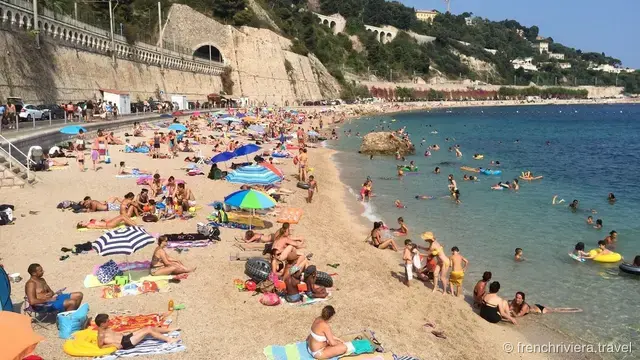
First, my favorite – the Plage des Marinieres at Villefranche-sur-Mer. It is covered with a fine gravel, so you do not need to use special shoes. In addition, the beach lies in a large bay, so that the water here is usually very calm, warm, and transparent. Sometimes I use a mask and go snorkeling here – watching life underwater.
There is a bar with snacks and drinks on the beach, which is a plus; and one more additional plus is the proximity of the train station. The Villefranche-sur-Mer stop is basically right above the beach. Just go down the stairs and you’re ready to enjoy the water and sunny attractions. On the minus side, there is only one shower (at least in the part I use, which is closer to the center of Villefranche and the train station) and a dingy toilet.
Paloma beach on the Cap-Ferrat peninsula
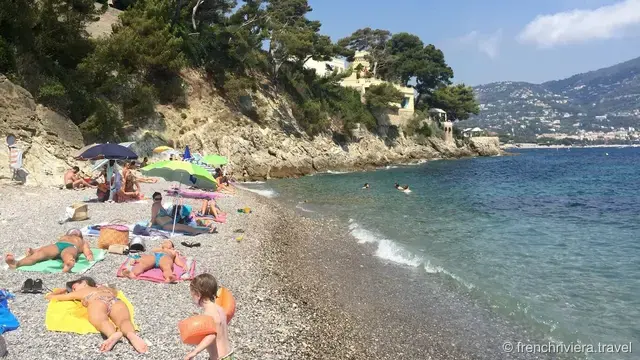
When I visited Paloma beach on the Cap-Ferrat peninsula, I immediately added it to my list of favorite beaches on the French Riviera. It’s very small, and most of it is occupied by a private restaurant. However, there is a small section where you can enjoy the beach’s charms for free. Above all, it impresses with a view of the Dog’s Head over Monaco and the numerous yachts moored within sight. Secondly, the water is clean and transparent.
On the minus side, it should be noted that it’s a pebble beach (so it’s worth having swimming shoes with you), and also that the sun hides behind the rocks and trees very quickly, so it’s definitely worth going to this beach before noon! There is a shower on the beach, and the restaurant also serves snacks and ice creams without having to order complete (and expensive) dishes.
To reach Paloma Beach, take bus 15 from Nice and get off at the last stop, Port de Saint-Jean, in the port of Saint-Jean-Cap-Ferrat. Finally, you have to go about 400 m to the south. You can also get there by car, but there are always big problems with parking! I use a scooter, and this seems to be the best solution.
The Petite Afrique beach at Beaulieu-sur-Mer
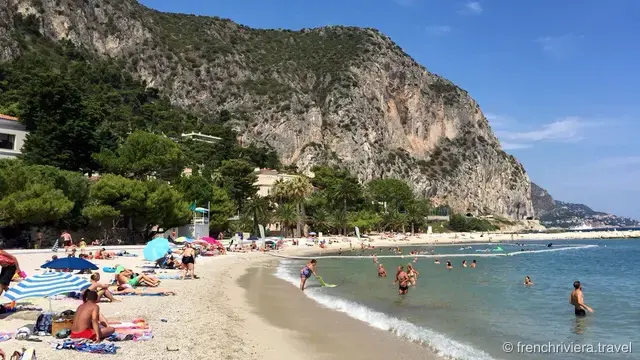
The La Petite Afrique beach is my latest discovery. This beach is hidden from tourists, who are unaware of its location, and so there are no crowds. To visit it, you have to enter Beaulieu-sur-Mer’s yacht harbor and then turn left. At the end, behind the restaurants, is the entrance to the beach.
La Petite Afrique has a large sunbathing area with great infrastructure. There are toilets, plenty of showers, and there is even a special walkway so you can walk along the beach and into the water. There are many palms around, which definitely add charm to the place. The downside of the beach is, unfortunately, a very small cove in which to swim, which sometimes causes the water to become cloudy.
The beach also has a fenced volleyball court and a snack bar (pizza, cold sandwiches, ice cream). The beach is covered with fine gravel, but not as pleasant as it is in Villefranche-sur-Mer. I use swimming shoes here (but they are not really necessary).
Larvotto beach in Monaco, Monte Carlo
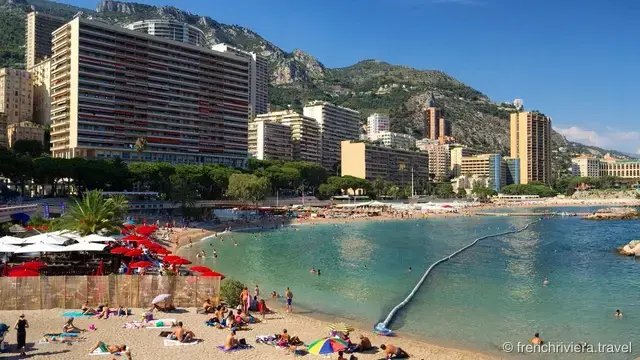
The most prestigious of the beaches described here is, of course, Larvotto beach in Monaco’s Monte Carlo. Every tourist wants to visit this place, however, the truth is that it’s a very ordinary beach! It’s crowded and covered with gray gravel. You can, of course, count on full infrastructure in the form of toilets, showers, shops, and restaurants. The water is transparent, and special nets protect the pool from jellyfish. Other beaches also use this solution, but in Monte Carlo they have by far the largest pool.
It’s the only beach in Monaco, so it’s easy to find it.
The beach in Nice
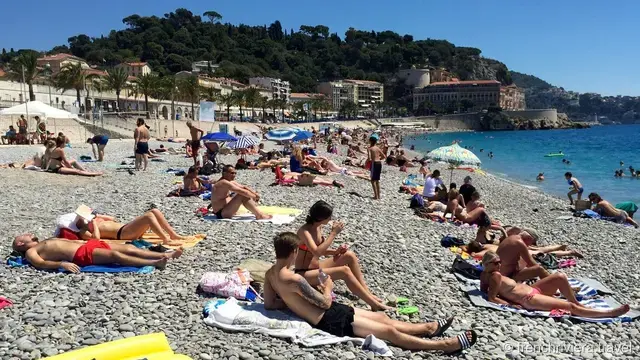
I have left the beach in Nice till last, mainly because of its popularity. It’s long – a few kilometers – but unfortunately completely pebbled. There are often bigger waves, the water is rarely transparent (but it does have an amazing azure color!), and without special shoes you can have a problem getting off the beach. There are showers and several private restaurants with sunbeds (usually €25–€50 per day). Toilets are, unfortunately, only available in restaurants. On the other hand, the beach is right in the city center, it is accessible for people with reduced mobility in several places, and there is a dog beach at its western end, by the airport.
More beaches worth visiting
Plage Mala in Cap-d’Ail
A sandy beach in Cap-d’Ail, just before Monaco, below a high cliff, with big stones in the water near the cliff. A coastal path leads to it from the train station; from the bus stop you have to walk down, and later back up, to the town center. In season there is an expensive restaurant with sunbeds and a snack bar. Getting there: the TER train (no hill to climb) or bus 600 from Nice.
Plage des Sablettes in Menton
A fine-gravel beach in the center of Menton, right next to the charming Old Town, with restaurants and facilities nearby; the whole seafront has been nicely renovated in recent years. Getting there: the TER train or bus 600 from Nice.
Plage Passable and Plage des Fourmis on Cap Ferrat
Plage Passable lies on the western side of the Cap Ferrat peninsula, facing Villefranche-sur-Mer: pebbles and gravel, a beach restaurant with sunbeds, and very busy in season. The path around the peninsula starts next to it. On the other side, in Beaulieu-sur-Mer, the sandy Plage des Fourmis has water-sports rentals, a restaurant and sunbeds. Getting there: bus 15 from Nice (stops Passable / Rothschild and Baie des Fourmis) or the train to Beaulieu-sur-Mer; there is little parking.
Plage de la Gravette and Plage de la Garoupe in Antibes
Plage de la Gravette is a sandy beach in the center of Antibes, next to the port and the city walls, with calm water in a small sheltered cove; it is also a good place to watch the sunrise over the bay. Plage de la Garoupe, on the Cap d’Antibes peninsula, is small, with fine sand, half of it taken by an expensive beach restaurant, and a wonderful view of the mountains and Nice; the coastal path around the cape starts here. Getting there: the train or bus 620 from Nice to Antibes, then bus 2 to the Fontaine stop for La Garoupe.
Juan-les-Pins
A long, narrow sandy beach between Juan-les-Pins and Golfe-Juan, with water-sports rentals and snack bars in season. The road and the railway run right behind it, so it is better for a swim than for a long, quiet day.
Plage du Midi in Cannes
A long, narrow sandy beach west of the Old Port of Cannes, where you meet more locals than tourists, with beach restaurants in summer. It is a short walk from the center, quieter than the beaches along the Croisette.
Sainte-Marguerite Island, off Cannes
The wild beaches of the Lérins Islands are mostly rocky. On the south side of Sainte-Marguerite, halfway along the island, there is a small pebble beach with fine sand just under the water, and nearby the underwater sculptures of Jason deCaires Taylor, which you can see with a snorkel. Getting there: boats from the port of Cannes all year (about €18 return), or a day trip from Nice in summer.
Pampelonne near Saint-Tropez
The most famous beach on the French Riviera: several miles of sand where And God Created Woman and The Troops of St. Tropez were filmed, with free sections and famous beach clubs such as Club 55. See my article on Pampelonne beach and the guide to Saint-Tropez. Getting there: by car, with paid car parks along the beach.
Practical tips for the beach
- Public and private beaches: private beaches have a restaurant, a bar, sunbeds (about €25 a day on average, up to €40–50 in the prettiest places), toilets, warm showers and changing rooms; you can rent a sunbed without eating there and eat without renting a sunbed. Public sections usually have only a cold shower.
- Lifeguards: official beaches are supervised in season; check the board at the entrance for the flag, the water temperature and jellyfish warnings.
- Dogs: not allowed on the beaches, except on dedicated dog beaches such as the one in Nice by the airport (in summer usually from 7pm to 9am only).
- Drinks: the rules on alcohol are unclear, but a quiet evening apéro with snacks and a glass of rosé is part of local summer life.
- Jellyfish: they can appear when the water is warm; Beaulieu-sur-Mer and Larvotto in Monaco have netted swimming areas.
Want to spend more time by the sea? See where to stay on the French Riviera to choose a town with the kind of beach you like.
Frequently asked questions
Are the beaches in Nice sandy?
No. The beach in Nice is made of pebbles, like most beaches between Menton and Cannes, so bring water shoes and a thick mat. For sand, go to Cannes, Antibes and Juan-les-Pins, Plage Mala in Cap-d’Ail or Pampelonne near Saint-Tropez.
Are beaches on the French Riviera free?
Yes. Every official beach has free public sections, usually with a cold shower. Private beaches with a restaurant rent sunbeds, typically for €25–50 a day, and you don’t have to eat there to rent one.
What is the best beach near Nice?
My favorite is Plage des Marinières in Villefranche-sur-Mer, 6 minutes by train: fine gravel, calm, clear water and the station right above it. Paloma Beach on Cap Ferrat is the prettiest, and Plage des Fourmis in Beaulieu-sur-Mer is sandy.
When is the water warm enough to swim on the French Riviera?
From June to early October. The sea is warmest in August, when it is about 75–79°F (24–26°C); in May it is still cool for most people.
Can you bring a dog to the beach?
Only to a few dedicated dog beaches, such as the one in Nice by the airport; in summer (mid-June to mid-September) dogs are usually allowed there only from 7pm to 9am. Elsewhere, dogs are not allowed on the beaches.
Are there jellyfish on the French Riviera?
Sometimes, when the water is warm. Official beaches post warnings next to the water temperature, and some, such as Beaulieu-sur-Mer and Larvotto in Monaco, have netted swimming areas.
Comments (0)
No comments yet. Be the first!