Cagnes-sur-Mer
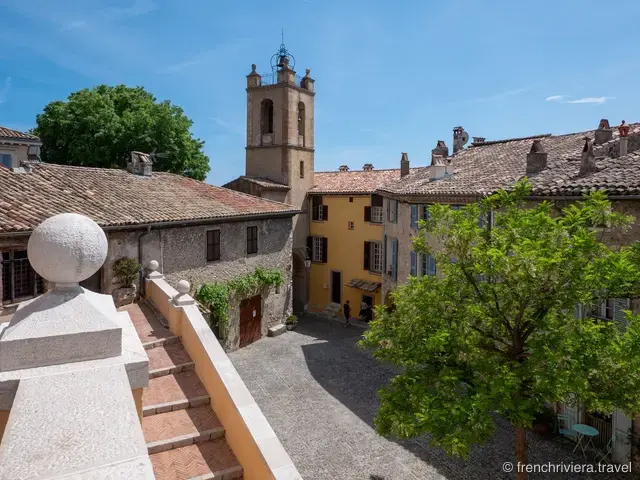
The inconspicuous coastal town of Cagnes-sur-Mer tempts us with a renovated promenade and long beaches. However, the pearl of the town is in its hinterland – the medieval Haut-de-Cagnes, the Old Town, with Grimaldi Castle towering over the whole area. The famous artist, Auguste Renoir, had his home in the town.
Cagnes-sur-Mer lies just beyond Nice and the narrow town of Saint-Laurent-du-Var, towards Antibes and Cannes. This town on the French Riviera is known to tourists mainly for its long seaside promenade. It differs from the Promenade des Anglais in Nice mainly in its width – it is narrower but also shorter.
Along the coast, of course, also runs a long beach, always well prepared during the tourist season. The promenade in Cagnes-sur-Mer is also a good place for a romantic dinner, or breakfast to the sound of the waves. Restaurants are available right on the beach.
Cagnes-sur-Mer at a glance
- Where: between Nice and Antibes, 15 minutes from Nice by train.
- Don’t miss: the medieval Haut-de-Cagnes with the Grimaldi castle, and the Renoir Museum.
- Getting up: free bus 44 to the old town, every 15 minutes.
- Also: a long seafront promenade with beaches and restaurants.
Haut-de-Cagnes and Grimaldi Castle
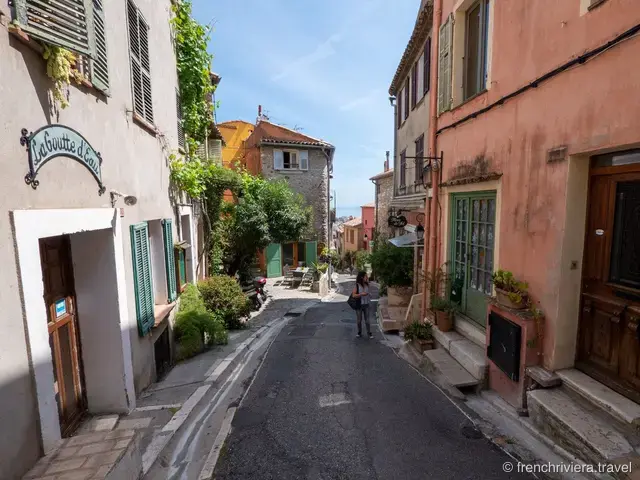
Haut-de-Cagnes, the old town of Cagnes-sur-Mer, is clearly visible from several points along the promenade. It was built, like other medieval cities on the French Riviera, on a hill tightly surrounded by tenements and narrow streets. At the very top is Grimaldi Castle (Château Grimaldi), built around 1300. It originally served as a fortress, but in 1620 it gained a more palatial character.
In 1937 the city bought the building, and since 1948 it has been made available as a museum. Admission costs a few euros. When planning a trip to this place, it’s worth remembering that the museum is closed in the middle of the day, between 12PM and 2PM, like most institutions and shops on the Cote d’Azur.
Our tour starts with an ascent of the tower. It offers a wonderful view towards Nice (the airport can be seen from here), Antibes, and the Alps. Only the nearby town of Vence is not visible as it is hidden behind the hills. I must admit that the organization for visiting the castle of Cagnes-sur-Mer surprised me, in a positive way. I did not experience any French mediocrity – everything was well thought out. The sightseeing route is planned in such a way that coming down from the observation tower, you visit other chambers without going astray. In addition, the staff speak English and are very polite.
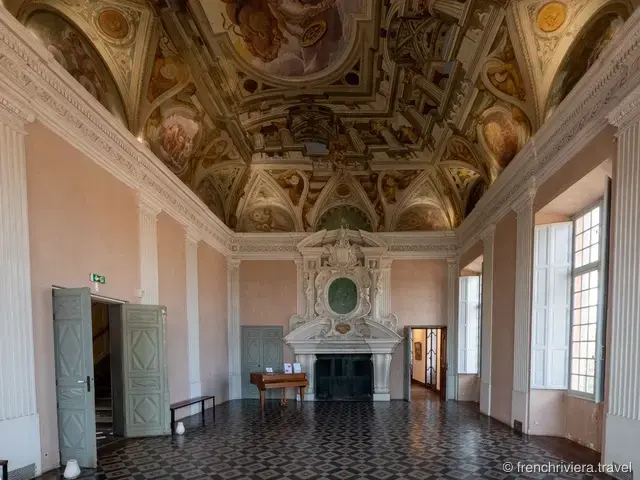
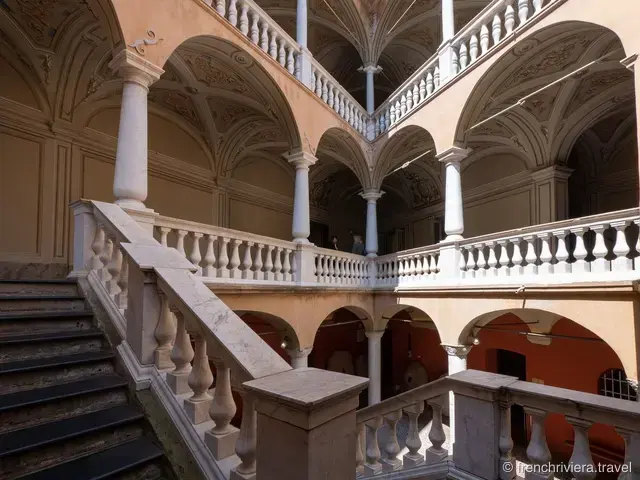
The castle’s interiors are filled primarily with exhibitions of paintings, graphics, and sculptures. On the ground floor, many items related to the production of olive oil have been collected. In one of the halls there are the various portraits of Suzy Solidor (a French singer and actress) painted by famous artists. Among them, a picture by the Polish artist, Tamara Lempicka, which is also considered to be the most famous portrait of Solidor.
To sum up: Grimaldi Castle in Cagnes-sur-Mer is a fairly typical museum, but with its collection housed in medieval chambers. It’s worth visiting, especially since Cagnes-sur-Mer runs the free 44 bus line, which enters the Old Town and passes the castle. It runs every 15 minutes.
Renoir in Cagnes-sur-Mer
There is at least one other place worth describing in Cagnes-sur-Mer. This is the Renoir Museum (Musée Renoir), organized in the house of the famous French Impressionist. Pierre-Auguste Renoir and his family moved to a villa in Cagnes-sur-Mer in 1908. The reason for this move was the painter’s rheumatism.The building was erected as a modern Mediterranean villa, with a magnificent garden. The museum itself was established in his villa at 19 Chemin des Collettes, after his death. Well-known artists were hosted here, including Matisse and Rodin, but equally frequent guests were young housewives from the town, who posed for the painter – usually nude.
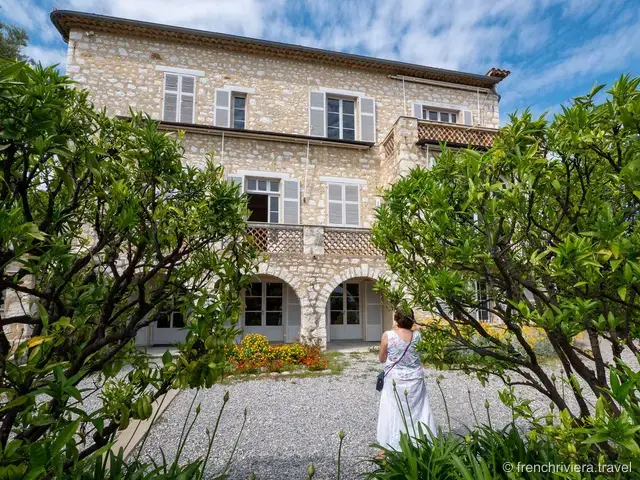
Renoir lived here until his death in 1919. The facility underwent a major renovation in 2013. Admission is paid, and a combined ticket also lets you visit Grimaldi Castle; current prices are on tourisme.cagnes.fr. The house is interesting, but don’t expect a large collection of the painter’s works.
How to get to Cagnes-sur-Mer?
You can reach Cagnes-sur-Mer by bus from Nice, for example, bus 620 (formerly 200) to Cannes (€2.20 in the ZOU! app or €2.60 from the driver), or by train. However, I recommend using Vélo Bleu city bikes. The journey from the center of Nice will take about 40 minutes, and you can easily park your bike at one of the stations in Cagnes-sur-Mer. The route follows the seafront promenades (except for the section at Nice airport) and is very picturesque. By train, Cagnes-sur-Mer is about 15 minutes from Nice; from the station, bus 655 also goes on to Saint-Paul de Vence and Vence, so you can combine all three in one day.
Frequently asked questions
How do you get from Nice to Cagnes-sur-Mer?
By TER train to Cagnes-sur-Mer station in about 15 minutes, or by ZOU! bus 620 towards Antibes and Cannes (€2.20 in the app or €2.60 from the driver). You can also cycle along the seafront in about 40 minutes.
How do you get up to Haut-de-Cagnes?
Take the free bus 44 from the center of Cagnes-sur-Mer, which runs every 15 minutes and stops by the Grimaldi castle, or walk up the steep streets.
Can you visit Renoir’s house in Cagnes-sur-Mer?
Yes, the Renoir Museum is in the painter’s villa at 19 Chemin des Collettes, where he lived from 1908 until his death in 1919, with an olive grove garden. Admission is paid; details on tourisme.cagnes.fr.
What is there to see in the Grimaldi castle?
A museum in a castle from around 1300, with a tower giving views to Nice, Antibes and the Alps, an olive oil collection and portraits of Suzy Solidor, including the famous one by Tamara de Lempicka. It closes at lunchtime.
Comments (0)
No comments yet. Be the first!