French Riviera travel tips for Americans: what to know before you go
I’ve lived in Nice since 2014, and as a licensed tour guide I spend much of the year with American visitors. The questions are always the same: Do I need cash? How much do I tip? Why is the restaurant kitchen closed at 4pm? This guide answers them, with the rules as they stand in November 2026 and links to the official sources, so you can land in Nice and feel at home from day one.
French Riviera travel tips at a glance
- Entry: no visa for up to 90 days; your passport must be valid for three months after you leave Europe. ETIAS is not in operation yet.
- Money: cards work almost everywhere; always choose to pay in euros, not dollars.
- Tipping: service is included; round up or leave a few euros.
- Meals: lunch about noon–2pm, dinner from 7:30pm; many kitchens close in between.
- Getting around: a bus or tram ride in Nice costs €1.70; trains link the coastal towns from Cannes to Menton.
- Driving: bring an International Driving Permit with your US license; no right turn on red.
- Power: 230 volts with European two-pin plugs; bring an adapter.
- Safety: watch for pickpockets; the emergency number is 112.
- Manners: say bonjour before anything else, every time.
Passports, the EES and ETIAS
US citizens don’t need a visa to visit France or Monaco as tourists. You can stay up to 90 days in any 180-day period across the whole Schengen area, so days spent in Italy, Spain or Switzerland on the same trip count too. Your passport must be valid for at least three months after the day you leave the Schengen area, and the U.S. Embassy in France recommends six months, since an airline can refuse to board you if your passport falls short (U.S. Embassy in France).
The Entry/Exit System (EES) is in force. The EU started it in October 2025, and since April 10, 2026, it has been running at every Schengen border (eu-LISA). The first time you enter, a border officer or kiosk takes a photo of your face and scans your fingerprints (not for children under 12), and your passport is no longer stamped. On later trips, the check is quicker (EU official EES site). You register at your first Schengen airport: if you connect in Paris, Amsterdam or Frankfurt, you go through passport control there, not in Nice. Allow extra time for the first registration and for the line at passport control.
ETIAS is not in operation yet. It’s a travel authorization that Americans will need before they fly to Europe. As of November 2026, no applications are being accepted, and the EU says it will announce the start date several months in advance. Once it starts, you’ll apply on the official website or app, pay €20, and the authorization will be valid for three years or until your passport expires (EU official ETIAS site). If you’re planning a trip for 2027, check that page before you book, and never apply through lookalike websites that charge extra.
Monaco has no border control. Monaco isn’t part of the EU, but France handles immigration for the principality, and there are no routine passport checks on the road or the train between France and Monaco (UK Foreign Office, Singapore Ministry of Foreign Affairs). You’ll cross from one country to the other without noticing. Monaco uses the euro too.
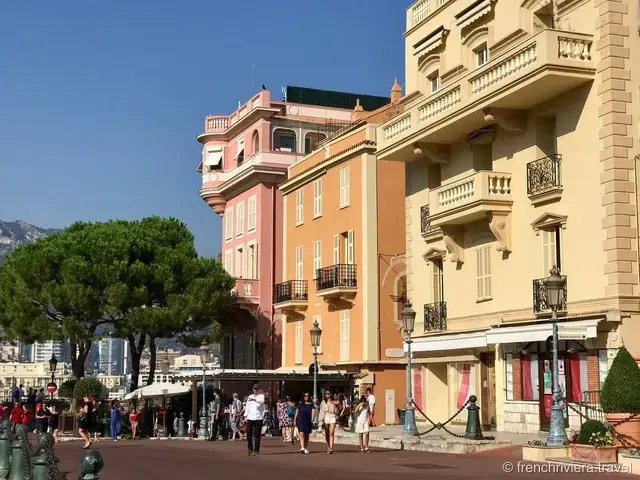
Carry your passport when you go to Monaco anyway: police can ask for ID, and the Monte Carlo Casino admits only adults with an original passport (copies aren’t accepted) to its gaming rooms, which open at 2pm. My guide to Monaco explains how to get there from Nice.
Money: cards, cash and “pay in euros”
France uses the euro. Visa and Mastercard are accepted almost everywhere, from hotels to bakeries, and tapping your card or phone (Apple Pay, Google Pay) is the norm. American Express works in hotels, department stores and larger restaurants, but small restaurants, market stalls and some taxis don’t take it, so bring a Visa or Mastercard as well. Make sure you know your card’s PIN (ask your bank if you don’t have one): you may need it for bigger payments and at gas pumps, toll booths and ticket machines.
When a card terminal or an ATM asks whether you want to pay in dollars or in euros, always choose euros. The “dollar” option, called dynamic currency conversion, uses an exchange rate set by the store’s payment provider, which is almost always worse than your bank’s (BEUC, the European consumer organization). If you aren’t asked, check that the screen shows euros before you tap.
For cash, use an ATM (distributeur) at a bank rather than the independent machines in tourist areas, which often charge higher fees. You won’t need much: €50–100 in small bills and coins covers market stalls, a coffee at the bar, small tips and a regional bus ticket bought from the driver.
Tipping: what locals leave
In France, the service charge is included in menu prices by law, and a tip is entirely voluntary (DGCCRF, the French consumer authority). Servers earn a regular salary, so nobody expects 20%. Here’s what my French friends do:
- Restaurants: leave some change or a few euros after a good meal. For excellent service at a nicer restaurant, 5–10% is generous. Card terminals rarely suggest a tip; if one does, you can skip it.
- Cafés and bars: leave the coins from your change, or nothing.
- Taxis: round up by a euro or two.
- Tour guides: a tip is never expected, but always appreciated after a tour you enjoyed: a few euros per person for a group tour, more for a private guide.
- Hotels: €1–2 per bag for the bellhop and a few euros for housekeeping at the end of your stay, if you like.
Restaurants and cafés
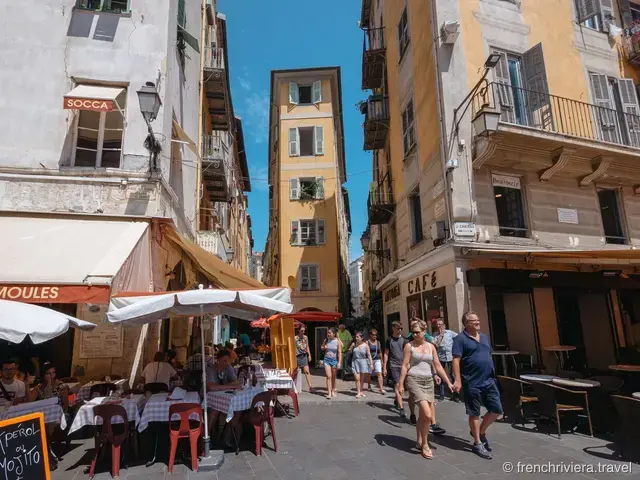
The French eat at set times, and on the Riviera they stick to them. Lunch is served from about noon to 2pm, and dinner from about 7:30pm. In between, many kitchens close completely, and a restaurant that is open may serve only drinks. If you’re hungry at 4pm, look for a sign saying service continu (food all day), common on the Promenade des Anglais and in the Old Town of Nice, or grab a sandwich or a slice of socca. In summer, locals often sit down at 8:30pm or later, and the best places are fully booked, so reserve a table or come early.
A few things that surprise Americans:
- Water: tap water is safe and free; ask for une carafe d’eau. If you just say “water,” you may get bottled water, and pay for it.
- Bread comes free with the meal. There’s usually no butter and no bread plate: put your piece on the table next to your plate.
- The check: the server won’t bring it until you ask, because rushing you would be rude. Catch their eye and say l’addition, s’il vous plaît. At lunch on a busy terrace, ask for it when you order dessert or coffee.
- Coffee: un café is an espresso. For something closer to American coffee, ask for un café allongé or un café américain; with milk, it’s un café crème. Coffee comes after dessert, not with it, and drinking it standing at the bar is often cheaper than at a table.
My guide to what and where to eat in Nice lists the local dishes to try and the restaurants I go back to.
Store hours: Sundays, Mondays and lunch breaks
Stores keep French hours, not American ones. In the centers of Nice and Cannes, many stores open on Sundays, but elsewhere most shops close on Sunday, and supermarkets that do open usually close for the day around 1pm. In small towns, many shops also close on Monday. In hill villages such as Saint-Paul-de-Vence and Èze, and in many smaller towns, shops, post offices and even some churches close for lunch, roughly from 12:30pm to 3pm.
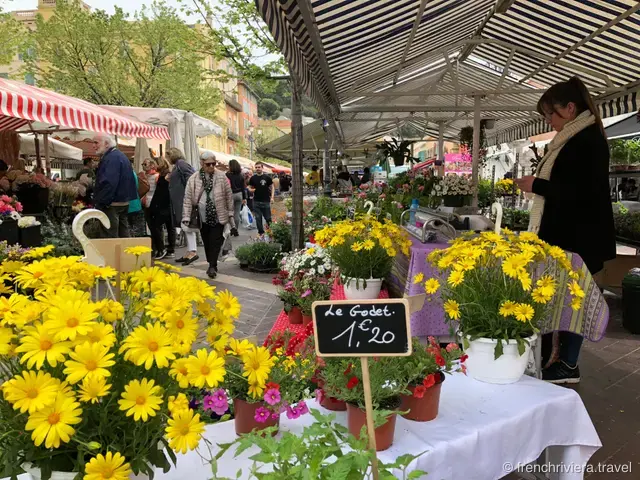
Markets are a morning affair. The food market on the Cours Saleya in Nice runs Tuesday through Sunday until about 1:30pm, while the flower stalls stay into the afternoon; on Mondays the square hosts an antiques market instead. My guide to markets in Provence and on the French Riviera lists the best ones by day.
Museums close one day a week, and it isn’t always Monday. In Nice, the Matisse Museum and the Masséna Museum are closed on Tuesdays, and the Museum of Fine Arts on Mondays; the Picasso Museum in Antibes is also closed on Mondays. Check before you go, especially around holidays.
Pharmacies are marked by a green cross, and the pharmacists give good advice: for a sore throat, a sunburn or blisters, start there before you look for a doctor. Some medications you buy over the counter at home need a prescription in France, so bring what you take regularly, in the original packaging. At night and on Sundays, one pharmacy in each area stays open (pharmacie de garde); find it on 3237.fr or on the notice in any pharmacy window.
Getting around: trains, buses and the tram
You can see most of the Riviera without a car, but there’s no single ticket for everything:
- Trains: ZOU! regional trains (run by SNCF) go along the coast from Cannes through Antibes, Nice and Monaco to Menton, with two to four trains an hour at busy times. Buy your ticket in the SNCF Connect app or at the station machine before you board; a single ticket from Nice to Cannes costs about €10.
- Buses and trams in Nice (Lignes d’Azur): a ticket costs €1.70 and is valid for 74 minutes with transfers. Tickets are loaded onto a reusable €2 card, or onto an Android phone in the Lignes d’Azur app (iPhone support has been announced for 2026, so check the app before you go). Validate every time you board, including when you transfer.
- Regional buses (ZOU!): buses such as the 600 to Monaco, the 602 to Èze and the 620 to Antibes and Cannes cost €2.20 in the ZOU! app or €2.60 from the driver (ZOU! fares). Your Nice ticket isn’t valid on them.
- From the airport: tram line 2 takes 25–30 minutes to the center of Nice. Skip the €10 airport ticket: ride the tram for free to the Grand Arénas stop and buy an ordinary €1.70 ticket there (plus €2 for the card).
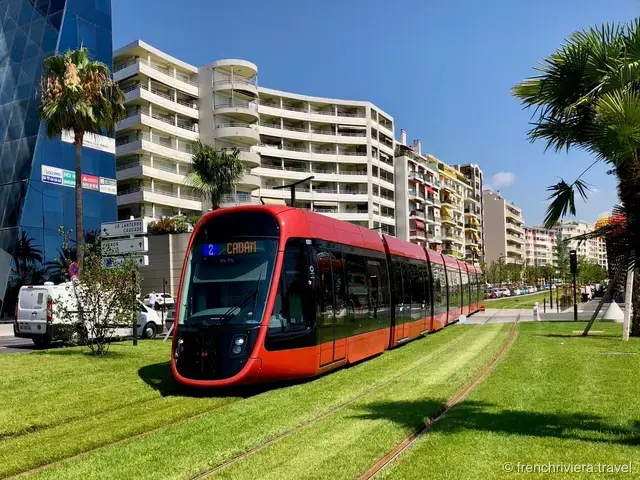
Ticket inspections are frequent, and fines are issued on the spot, so always validate. My guides to public transportation in Nice and getting from Nice airport have all the details, and my 7-day French Riviera itinerary shows how to plan a week of day trips by train and bus.
Driving on the French Riviera
You can drive in France on your US license during a vacation, but French law says a license that isn’t written in French must be accompanied by an International Driving Permit or an official translation (Service-Public.fr). Get an IDP from AAA before you leave; it’s cheap and quick, and rental companies may ask for it. Most companies rent only to drivers aged 21 or over, and charge a young-driver fee if you’re under 25.
What’s different from home:
- No right turn on red. A red light means stop, unless a flashing yellow arrow next to it lets you turn after yielding.
- Speed limits are in km/h: 130 (80 mph) on the toll highways (autoroutes), 80 (50 mph) on most two-lane roads and 50 (30 mph) in towns, often 30 (20 mph) in town centers (Your Europe). Speed cameras are everywhere, and the rental company will pass the fine on to you, plus a fee.
- Priority to the right: at intersections without signs or lights, especially in towns, cars coming from the right have the right of way. On traffic circles, cars already in the circle have the right of way.
- Alcohol: the limit is 0.05% blood alcohol, compared with 0.08% in most of the US.
- Phones: you can use a phone only through the car’s hands-free system; holding it or wearing earbuds is illegal.
- Tolls: the A8 along the coast is a toll road; pay by card at the booths.
- Parking in Nice, Monaco and Cannes is expensive and scarce. Use the public underground garages, and never leave anything visible in the car.
On the coast between Cannes and Menton, a car is more trouble than it’s worth. But for the hill villages, Grasse and Provence, a car is ideal. My guide to renting a car on the French Riviera explains where to pick one up and what it costs.
Phones, Wi-Fi and power
Your US phone will work here. Check your carrier’s international plan before you leave, or buy a European eSIM online, which is usually much cheaper for a week or two. Monaco has its own phone network and country code (+377), so make sure your plan covers Monaco as well as France. It’s worth downloading offline maps for the hill villages, where the signal can be weak.
France runs on 230 volts with European plugs: two round pins, types C and E. Phone and laptop chargers are almost always made for 100–240 volts (check the fine print on the charger), so all you need is a plug adapter. US hair dryers, curling irons and flat irons are usually 120 volts only and can burn out; use the hotel’s hair dryer or buy a cheap one here.
Staying safe
The French Riviera is a safe place to visit, and violent crime against tourists is rare. The problem is pickpockets, who work wherever there are crowds and distracted visitors. In Nice, I see them on the crowded tram, in the Old Town and the Cours Saleya market, and along the Promenade des Anglais, where phones left on café tables disappear in seconds. Thefts also happen on the trains between Nice and Monaco and at Nice airport, including from rental cars while they’re being loaded (UK Foreign Office). On the beach, never leave your bag unattended when you go for a swim. Carry your bag in front of you, keep your phone in a zippered pocket and be wary of anyone who gets too close with a petition on a clipboard or a sudden question.
If something does happen, these are the numbers to know (U.S. Embassy in France):
- 112: all emergencies, from any phone.
- 15: ambulance and medical emergencies (SAMU).
- 17: police.
- 18: fire department.
There’s no US consular office on the Riviera: consular services are provided in Paris, Marseille and Strasbourg (U.S. Embassy in France). The nearest is the U.S. Consulate General in Marseille, about 2.5 hours from Nice by train. For an emergency involving a US citizen, such as an arrest or a serious accident, call the embassy switchboard at +33 1 43 12 22 22, which answers 24 hours a day. A lost or stolen passport means a trip to the consulate in Marseille, so keep a photo of it on your phone. Before you leave, enroll in the State Department’s Smart Traveler Enrollment Program (STEP) to receive safety alerts.
Get travel insurance. Health care in France is excellent and costs much less than at home: a regular visit to a family doctor costs €30. But a hospital stay can cost thousands of dollars and a medical flight home tens of thousands, and Medicare and many US health plans don’t cover you abroad.
Beaches and what to wear
Most beaches between Menton and Cannes are pebbly, not sandy, including the long beach in Nice. Water shoes make getting in and out much easier; they cost about €10 a pair in the shops along the Promenade des Anglais. For sand, head to Cannes, Juan-les-Pins or Cap-d’Ail.
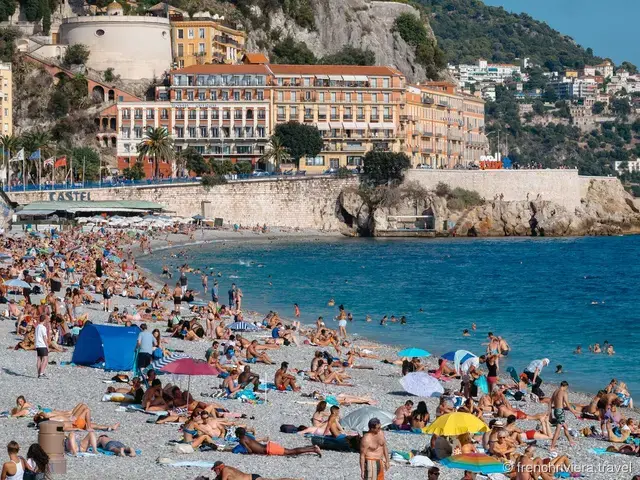
Most of the beach is public and free, but some sections are run by private beach clubs, which rent sunbeds and umbrellas (about €25–50 a day in Nice, often much more in Cannes, Monaco and Saint-Tropez) and serve lunch. Public sections usually have only a cold shower. Lifeguards are on duty at official beaches in summer, and flags show whether it’s safe to swim. Going topless is legal on most beaches and nobody stares, though you’ll see it less often than you might expect. My guide to the best beaches on the French Riviera compares them one by one.
Cover up when you leave the beach. Every summer, Nice and several other towns on the coast ban walking around town in a swimsuit or shirtless. In Monaco, you can be fined for walking around in swimwear, shirtless or barefoot anywhere except on the beach (UK Foreign Office). In churches, cover your shoulders and take off your hat; keep your voice down and don’t walk around during Mass.
Riviera style is casual but put-together: linen, sundresses and clean sneakers fit in almost anywhere, and you’ll need something dressier only for upscale restaurants or the casino in Monte Carlo.
A little French goes a long way
Most people who work with tourists here speak some English. But in France, politeness has rules, and the first one is simple: always say bonjour first, when you walk into a store or café, when you get on a bus and before you ask anyone anything. After about 6pm, it’s bonsoir. Starting with a question in English, without a greeting, comes across as rude, and you’ll feel the difference immediately. Say merci, au revoir when you leave.
A few words are enough:
- Bonjour / bonsoir: hello / good evening
- S’il vous plaît / merci: please / thank you
- Excusez-moi: excuse me
- Parlez-vous anglais?: do you speak English?
- Je voudrais…: I’d like…
- Une carafe d’eau, s’il vous plaît: a pitcher of tap water, please
- L’addition, s’il vous plaît: the check, please
The French keep their voices down in public, especially in restaurants and on trains, and it helps to do the same.
Sun and heat
The Mediterranean sun is strong, even in spring and on cloudy days. In July and August, afternoon highs in Nice average about 82°F (28°C), and heat waves push them well above 90°F (32°C), especially inland. Wear sunscreen and a hat, carry water and save the hill villages and coastal walks for mornings and late afternoons. In summer, hiking trails in the hills can be closed on days of high fire risk. My guide to the best time to visit the French Riviera explains what each month is like.
My checklist before you fly
- A passport valid for at least three months after your return date (six months to be safe), and a photo of it on your phone.
- A last look at the official ETIAS website if you’re traveling in 2027.
- A Visa or Mastercard with no foreign transaction fees, and its PIN.
- An International Driving Permit from AAA if you’ll drive.
- A plug adapter for type C/E outlets.
- An eSIM or an international plan that covers France and Monaco.
- Travel insurance with medical coverage.
- The Lignes d’Azur, ZOU! and SNCF Connect apps.
- Water shoes for the pebble beaches.
- Restaurant reservations for your first evening.
Still choosing a base? My guide to where to stay on the French Riviera compares Nice, Cannes, Antibes, Monaco and other towns, with the cost of a day in each.
Frequently asked questions
Do Americans need a visa or ETIAS for the French Riviera?
No visa is needed for a vacation of up to 90 days in any 180-day period. As of November 2026, ETIAS is not in operation yet and no start date has been announced; the EU says it will announce the date several months in advance. Your passport must be valid for at least three months after the day you leave the Schengen area, and the U.S. Embassy recommends six months.
Do I need cash on the French Riviera?
Very little. Visa and Mastercard are accepted almost everywhere, including contactless and phone payments, while American Express isn’t as widely accepted. Carry €50–100 in small bills and coins for market stalls, small cafés, tips and regional bus tickets bought from the driver.
How much should I tip in a restaurant in France?
Service is included in French menu prices by law, so a tip is never required. Locals leave some change or a few euros after a good meal; for excellent service at a nicer restaurant, 5–10% is generous.
Can I drive on the French Riviera with a US driver’s license?
Yes, for a vacation. French law requires a license that isn’t in French to be accompanied by an International Driving Permit (IDP) or an official translation, so get an IDP from AAA before you leave. Rental companies may ask for it too.
Is the French Riviera safe for American tourists?
Yes. Violent crime against visitors is rare, but pickpockets work the crowded places: the tram in Nice, the Old Town, the Promenade des Anglais, trains between Nice and Monaco and the beaches. Keep your phone off café tables and never leave a bag alone on the beach. In an emergency, dial 112.
Comments (0)
No comments yet. Be the first!